
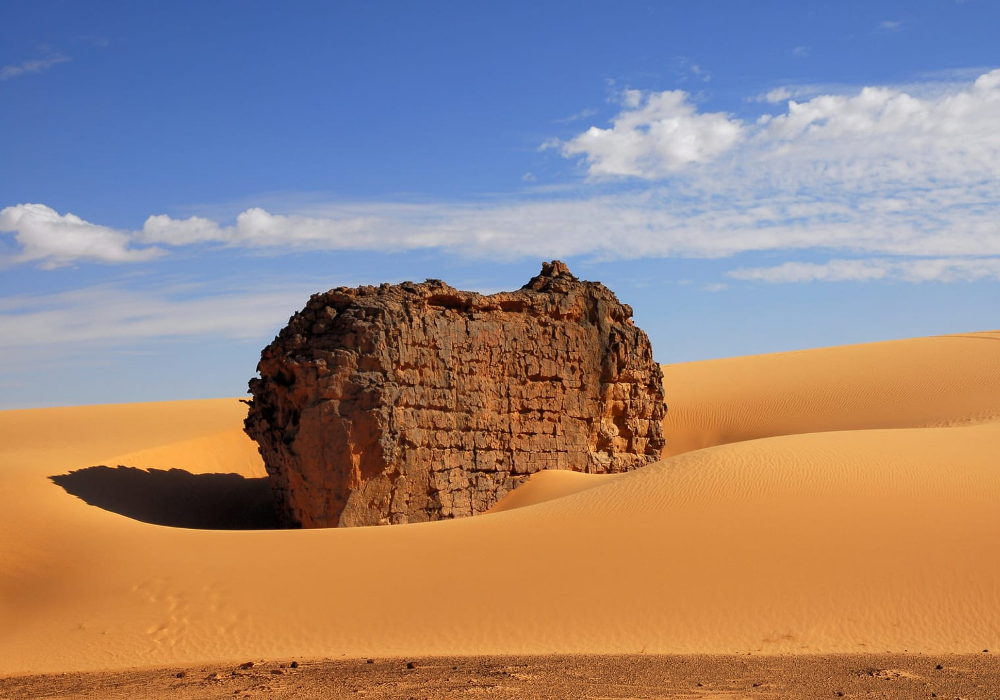
Algeria's Southern Sahara Desert delivers towering dunes, ancient oases and some of the darkest night skies on Earth, all shaped by Tuareg traditions that have endured for centuries. This guide covers the region's geography and climate, camel trekking and sandboarding routes, cultural festivals worth building a trip around, and the packing and safety details that make travel here comfortable rather than gruelling. Read on before you book.
The Southern Sahara stretches across Algeria in a landscape that resists easy description. Gold dunes rise and shift with the wind, rocky plateaus stretch flat to the horizon, and small green oases appear like promises kept in the middle of all that dry heat. This part of the country sits far from the coastal cities most visitors picture when they think of Algeria, and that distance is exactly the point.
Travellers who make the trip south come away with something harder to find elsewhere: genuine quiet, a sky thick with stars, and contact with Tuareg communities who have called this desert home for generations. This guide walks through the geography and climate you'll be working with, the cultural encounters worth prioritizing, the adventure activities on offer, and the practical details, from packing to safety, that turn an ambitious trip into a smooth one.
Exploring the Sahara's vastness
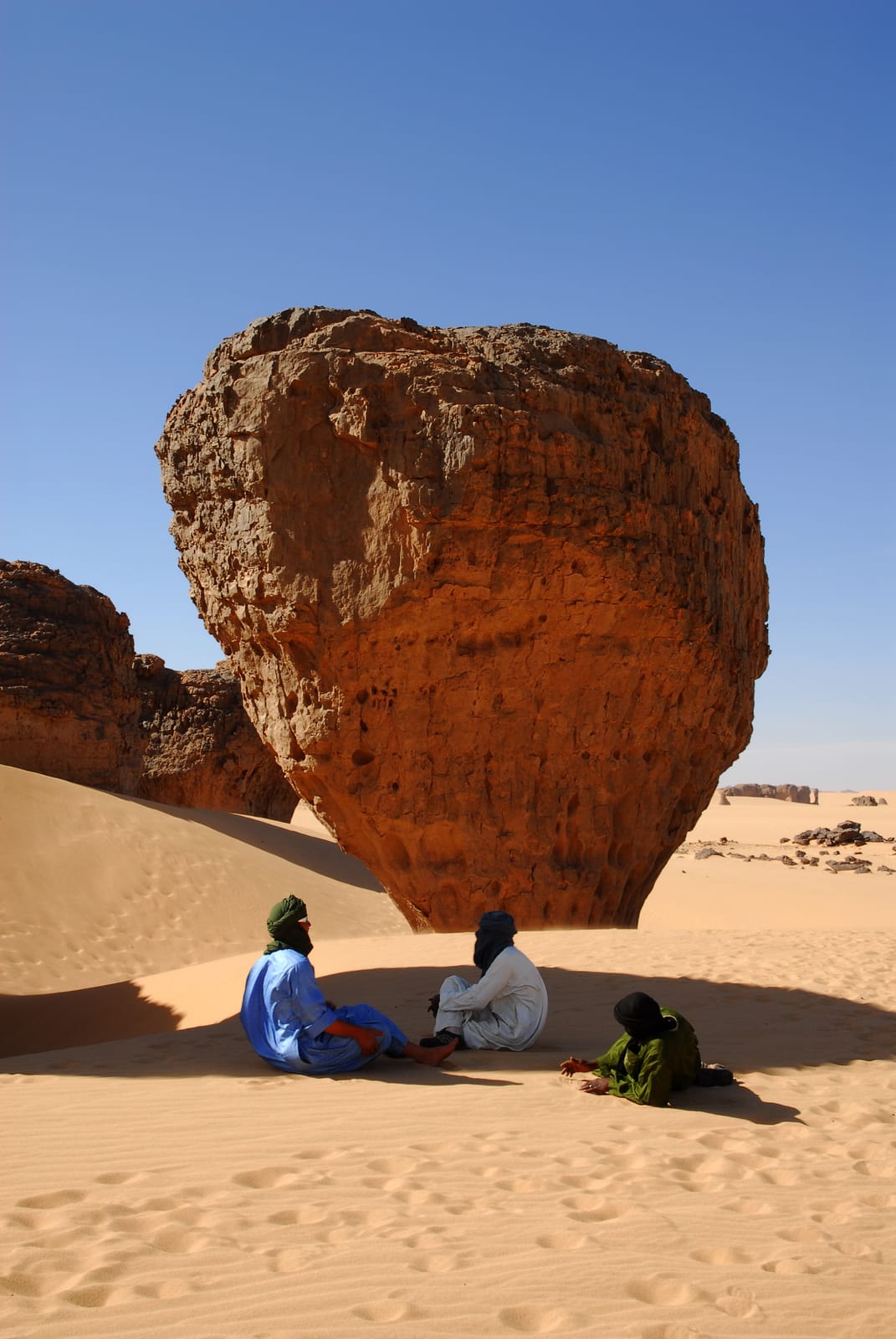
Algeria's Southern Sahara covers a genuinely massive stretch of North Africa, and its scale is part of the draw. The region moves between several distinct landforms rather than presenting one uniform sea of sand, and that variety shapes both the scenery and the routes travellers take through it.
The terrain includes:
- Sand dunes. Towering and constantly shifting, these dunes catch the light differently through the day and form some of the most photographed scenery in the country.
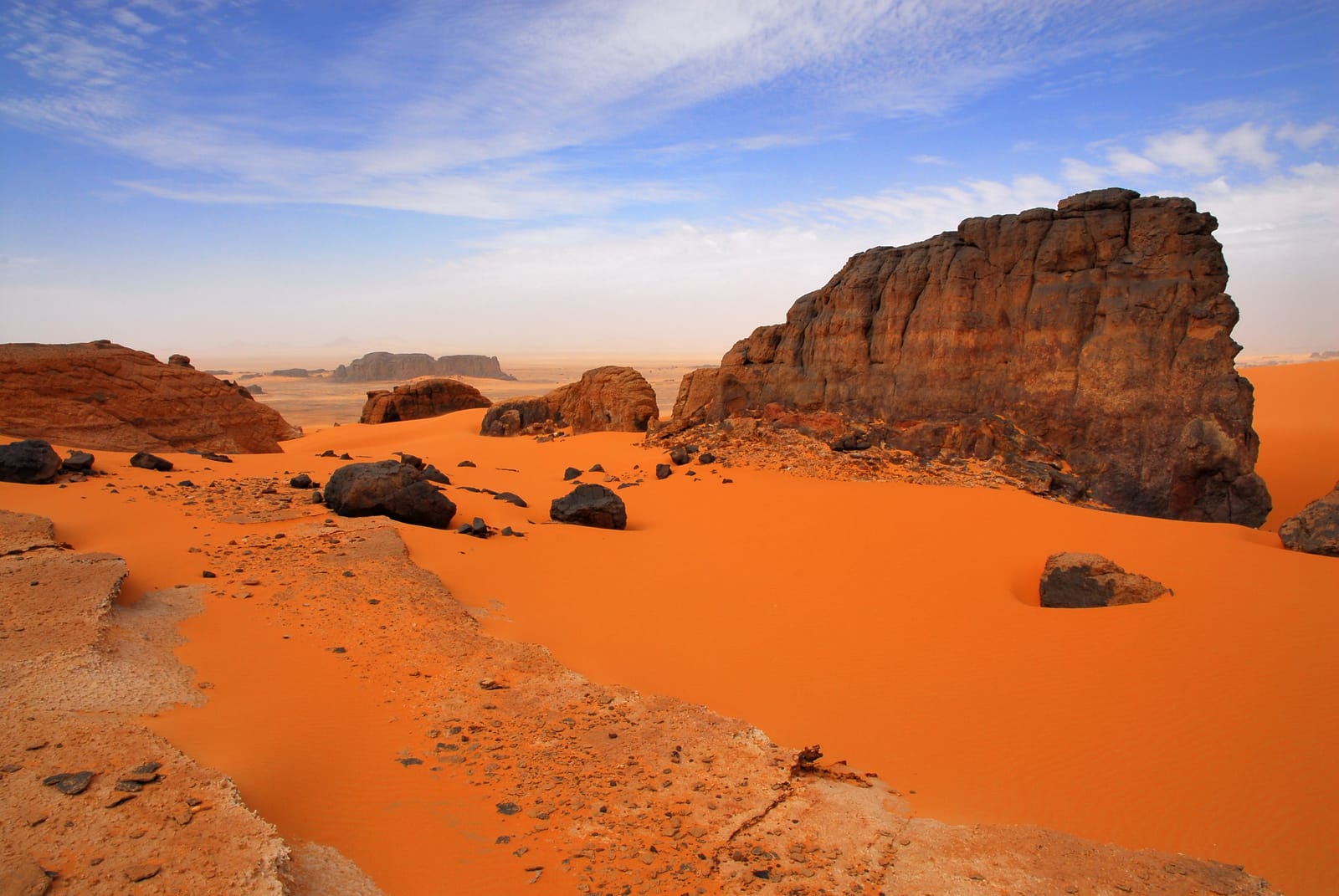
- Rocky plateaus. Flat, rugged expanses that contrast sharply with the softer dune fields nearby.
- Oases. Small green pockets fed by underground water, home to palm groves and, often, small settlements.
- Mountain ranges. The Ahaggar (Hoggar) Mountains in the deep south rise dramatically above the desert floor, with volcanic peaks and dramatic rock formations.
| Feature | Description | Example area |
|---|---|---|
| Sand dunes | High, shifting hills of sand | Grand Erg Oriental |
| Rocky plateaus | Flat, rugged rock surfaces | Tademaït Plateau |
| Oases | Water sources with palm groves | Timimoun, Tamanrasset |
| Mountain ranges | Elevated volcanic and rocky terrain | Ahaggar (Hoggar) Mountains |
That scale tends to affect people. Long stretches of open desert have a way of quieting the mind, and most visitors describe a real sense of solitude and perspective by the end of a multi-day trip.
Climate and weather patterns
The Southern Sahara runs to extremes, and that shapes almost every decision you'll make about when and how to visit. Daytime highs in summer regularly climb past 45°C (113°F), while clear night skies let heat escape fast, so temperatures can drop close to freezing during winter nights. Rainfall is rare, generally well under 50 millimetres a year, and when it does happen, it tends to arrive suddenly.
A few patterns are worth planning around:
- Daytime heat. Intense sun quickly warms the sand and air, particularly between late morning and mid-afternoon.
- Cold nights. With little cloud cover to trap warmth, temperatures fall sharply after sunset, especially in winter.
- Low rainfall. Water is scarce and unpredictable, which shapes both wildlife and settlement patterns.
- Wind and sandstorms. Strong winds can kick up sudden sandstorms and reshape dunes over time.
| Season | Typical day temperature | Typical night temperature |
|---|---|---|
| Summer (May to September) | 38°C to 45°C+ | 20°C to 28°C |
| Winter (October to April) | 18°C to 27°C | 0°C to 8°C |
These figures are averages rather than guarantees, and conditions vary by exact location and elevation, so check a current forecast close to your travel dates. Respecting the desert's extremes, rather than underestimating them, is the difference between an incredible trip and a genuinely risky one.
Cultural encounters
The landscape draws people south, but it's the cultural encounters that tend to stay with travellers longest. Meeting Tuareg communities and taking part in local festivals gives a trip real texture that could otherwise stay purely scenic.
Tuareg traditions
The Tuareg are the Sahara's best-known inhabitants, often called the "Blue People" for the indigo-dyed cloth they traditionally wear, which can tint the skin over time. They've maintained a presence across this desert for centuries, adapting a nomadic way of life to one of the planet's harshest environments.
A few defining elements of Tuareg culture include:
- Language. Tamasheq, a Berber language traditionally written in the Tifinagh script.
- Clothing. The tagelmust, a long indigo veil worn by men, protects against the sun, wind and blowing sand.
- Music. Traditional songs and rhythms carry stories of history, courage and daily life.
- Craftsmanship. Silver jewellery and leatherwork remain important trades, often passed down within families.
- Way of life. Camel and goat herding still shape the rhythm of life for many Tuareg families, alongside a growing role in guiding and desert tourism.
Hospitality runs deep in Tuareg culture, and sharing tea with a host is one of the most common ways travellers connect with local communities. The tea ceremony, usually conducted in three rounds, serves as a gesture of welcome and respect. Sitting with elders who share stories and history adds a layer of understanding that no guidebook can fully replace.
Local festivals worth planning around
A handful of cultural festivals give travellers a reason to time a trip around a specific date rather than just a season. Two of the better-known events in Algeria's south are the Ahellil Festival (also staged as the International Saharan Tourism Festival) in Timimoun, and the Sebeiba Festival in Djanet.
| Festival | Location | Typical timing | Highlights |
| Ahellil Festival / International Saharan Tourism Festival | Timimoun | Around late December | UNESCO-listed Ahellil music and poetry, camel racing, craft markets |
| Sebeiba Festival | Djanet | October to November | Traditional Tuareg sword dance, music and community gatherings |
Dates shift from year to year, so confirm current scheduling with a local operator or the Algerian tourism board before building a trip around either event. Attending one of these festivals offers a direct window into the resilience and creativity of Saharan communities and the atmosphere, full of colour, rhythm and shared food, tends to be a highlight travellers mention long after they're home.
Adventure activities
Beyond the cultural side, the Southern Sahara is a genuine playground for anyone who wants to get out into the landscape rather than just look at it from a vehicle window. Options range from slow, traditional camel treks to fast-paced dune bashing, and most desert tours in the region combine a few of these activities into a single itinerary.
Camel trekking
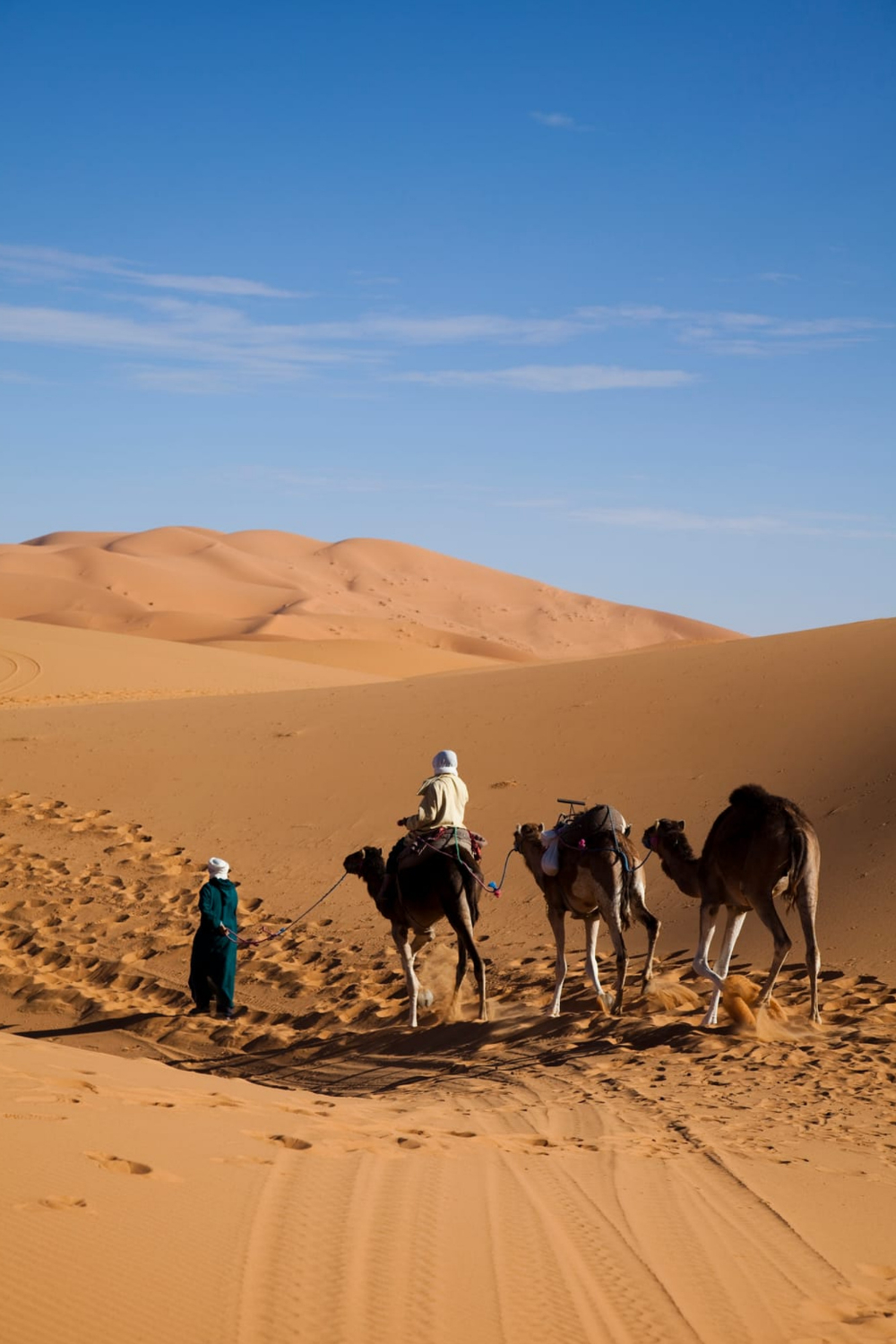
Camel trekking remains the most traditional way to move through this desert, and it's still the best way to experience the dunes at a human pace. Camels handle long, hot distances far better than most vehicles on soft sand, and a good guide will time the trek to avoid the hottest hours of the day.
Popular general routes include areas around:
- The Ahaggar (Hoggar) region, with rocky volcanic scenery and access into the Tassili n'Ajjer area.
- Tamanrasset and the surrounding oases, a common starting point for multi-day desert expeditions.
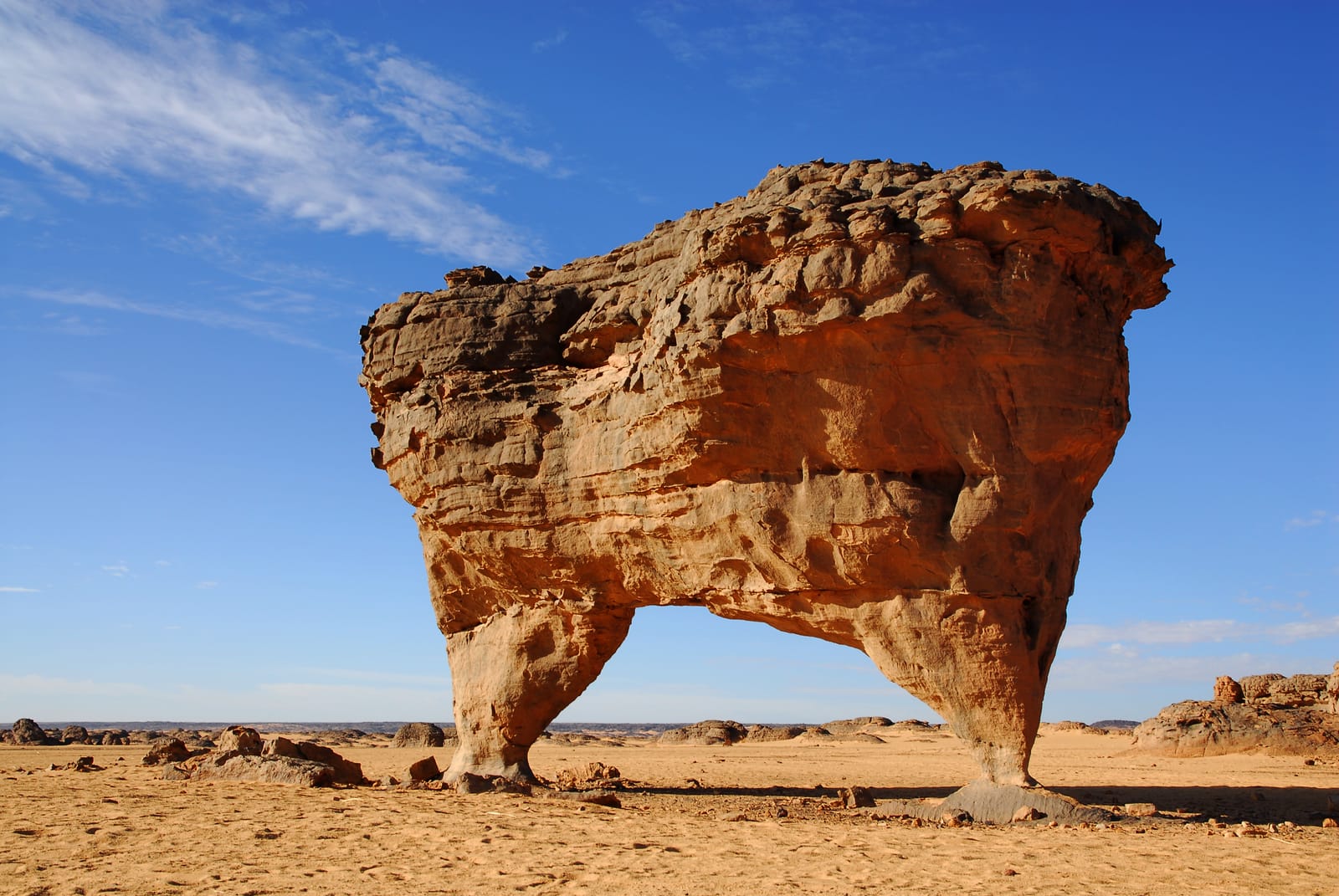
- Djanet and the Tassili n'Ajjer plateau, known for prehistoric rock art alongside striking sandstone formations.
Trip lengths vary widely, from short half-day rides out of an oasis town to multi-day treks with overnight desert camping. A reputable local operator will confirm exact distances, difficulty and duration for the specific route and season, since conditions and access can shift year to year.
Sandboarding and dune bashing
For a faster-paced contrast to camel trekking, sandboarding and dune bashing both deliver a serious adrenaline hit. Sandboarding works much like snowboarding, using a board to slide down steep dune faces, and it suits a wide range of ages and skill levels. Dune bashing swaps the board for a 4x4, with an experienced driver navigating steep climbs and sharp drops across the sand.
A few practical notes for either activity:
- Sandboarding calls for a proper board, a helmet and, ideally, knee protection.
- Dune bashing requires a genuinely experienced local driver, since misjudging a dune face carries real risk.
- Both activities work best during the cooler parts of the day, generally early morning or late afternoon.
- Bring water, sunglasses and sunscreen regardless of which activity you choose.
Many desert tours pair sandboarding or dune bashing with a calmer camel trek or an overnight camp, giving travellers a full day that balances high energy with quiet reflection.
Essential travel tips
Best time to visit
Timing matters enormously in a region prone to temperature extremes. The cooler months, roughly October through April, offer the most comfortable conditions for exploring on foot, by camel or by 4x4.
| Month | Typical day temperature | Typical night temperature | Travel suitability |
|---|---|---|---|
| October | 24°C to 30°C | 10°C | Excellent |
| January | 18°C to 22°C | 2°C to 6°C | Good, pack for cold nights |
| April | 26°C to 32°C | 12°C | Excellent |
| July | 40°C and above | 25°C+ | Not recommended |
Shoulder seasons, spring and autumn in particular, tend to bring fewer crowds along with milder weather, making them the sweet spot for most travellers.
Packing essentials
Packing light matters in the desert, but a few items make the difference between a comfortable trip and a miserable one. Loose, breathable, light-coloured clothing with long sleeves and full-length pants protects skin from both sun and blowing sand. Sturdy, closed shoes handle sand and rocky ground far better than sandals.
Beyond clothing, prioritize:
- A wide-brimmed hat and UV-rated sunglasses
- High-SPF sunscreen and lip balm with sun protection
- A reusable water bottle, plus electrolyte tablets for longer treks
- A warm layer or fleece for cold desert nights
- A basic first aid kit, a flashlight or headlamp, and a scarf or bandana for sandstorms
Accommodation options
Accommodation across the Southern Sahara ranges from traditional desert camps to more comfortable, eco-conscious lodges, and the right choice depends on how much comfort you're willing to trade for authenticity.
Desert camps
Desert camps offer the most direct connection to Saharan life, with sleeping arrangements often set up in traditional tents near dune fields or oasis towns such as Tamanrasset, Djanet or Timimoun. Most camps include simple mattresses and bedding, communal meals cooked over open fires and guided activities such as camel rides, sandboarding or stargazing.
Expect limited electricity and basic bathroom facilities at most camps. What they lack in modern comfort, they generally make up for with genuinely dark skies and a level of quiet that's hard to find anywhere else.
Eco-conscious lodges
For travellers who want a softer landing after a day in the dunes, a smaller number of eco-conscious lodges operate near larger oasis towns. These properties tend to rely on solar power, use local building materials, and work directly with area guides and artisans. Rooms typically include proper beds and private bathrooms, and some sources food from nearby farms. Availability is limited compared to more established desert destinations, so book well ahead and confirm the property's current operating status before finalizing plans.
Safety and health advice
Navigating remote areas
Large stretches of the Southern Sahara have no marked roads and no cell signal, which makes a knowledgeable local guide essential rather than optional. Before setting out, confirm that your operator carries proper navigation equipment, shares your planned route with a base contact, and carries extra fuel and water for unexpected delays. Travelling with an experienced guide, rather than attempting independent desert navigation, remains the safest approach for almost every traveller.
A basic first aid kit is worth carrying regardless of your itinerary:
| Item | Purpose |
|---|---|
| Bandages and antiseptic | Treat minor cuts and scrapes |
| Pain relievers | Manage headaches or muscle soreness |
| Tweezers | Remove thorns or small debris |
| After-sun or aloe cream | Soothe sunburn |
Managing extreme heat and cold
Heat exhaustion and sunstroke pose real risks in this climate, so pace yourself and watch for warning signs. Heavy sweating combined with weakness, dizziness, nausea or confusion all signal it's time to stop, find shade and rehydrate immediately, cooling down with water or a damp cloth if symptoms persist.
During daylight hours, lightweight clothing that fully covers your skin, a wide-brimmed hat and frequent water intake go a long way toward preventing trouble. Limiting strenuous activity between roughly 11 a.m. and 4 p.m., when the sun sits highest, makes a meaningful difference. Once night falls, warm layers and a properly rated sleeping bag matter just as much, since temperature swings between day and night can exceed 20°C in some seasons.
Where the desert leaves its mark
A trip through Algeria's Southern Sahara tends to stay with people longer than a typical vacation. The scale of the dunes, the silence between them, and the warmth of Tuareg hospitality combine to create something genuinely hard to replicate elsewhere. Whether you spend your days on a slow camel trek between oases or racing a 4x4 down a dune face, the desert has a way of resetting your sense of both time and distance.
Pack for the extremes, build in time for a festival if the dates line up, and lean on local guides who know this landscape intimately. Come prepared, stay curious, and the Southern Sahara will give you a trip that's difficult to forget.