
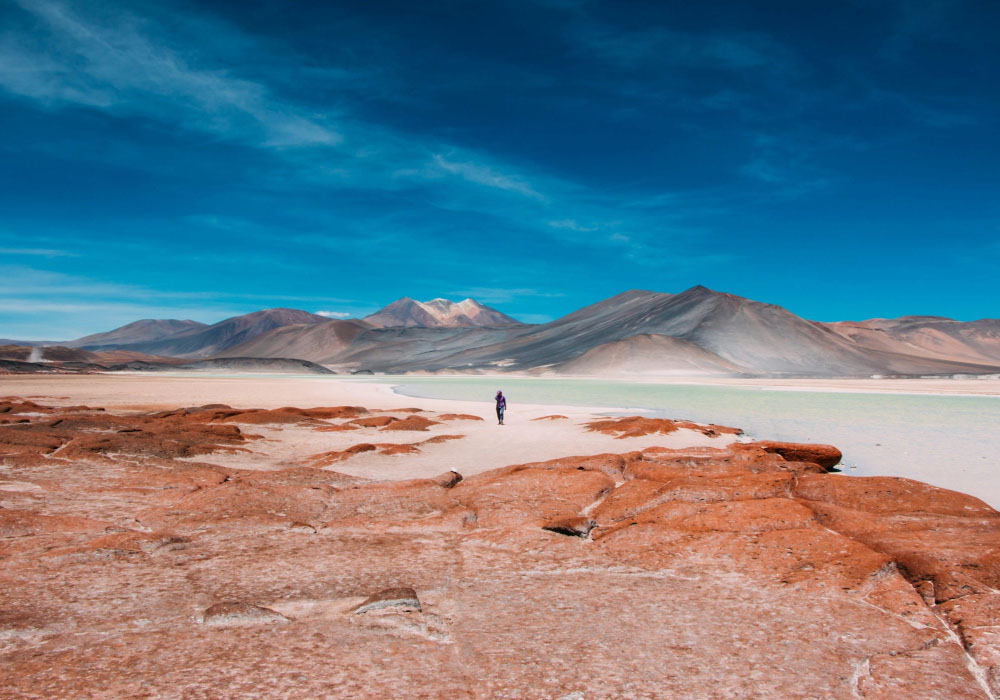
The Atacama Desert occupies a high-altitude plateau in northern Chile where the Andes meet one of the driest places on Earth. Volcanic peaks, salt flats, steaming geysers, and flamingo-edged lagoons fill the days with astonishing scenery. The nights deliver something equally remarkable: skies so clear the Milky Way becomes a permanent fixture overhead. Whether budget-minded or luxury-bound, this guide covers stargazing, hikes, food, and where to stay.
Few places on Earth stop people in their tracks the way Chile's Atacama Desert does. Located in northern Chile, wedged between the Pacific coast and the spine of the Andes, the Atacama is officially the driest non-polar desert on the planet. Some weather stations here have never recorded a single drop of rain in their entire operational history. Yet this extreme aridity is precisely what makes the region so visually arresting: with almost no moisture to scatter light, the skies above are crystalline, the colours at ground level are fierce and saturated, and the geological formations look borrowed from another world entirely.
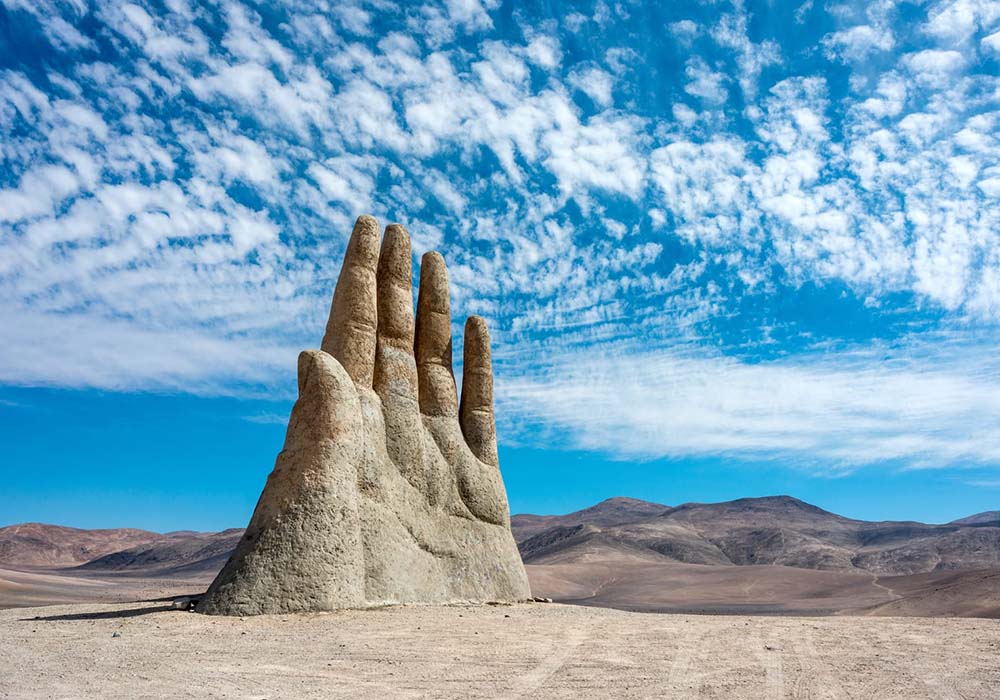
Red-rocked canyons, snow-capped volcanoes, lunar valleys of sculpted salt, vast glittering salt flats, turquoise lagoons fringed by flamingos, and bubbling geyser fields — all within a day's drive of the quiet oasis town of San Pedro de Atacama, your base for just about everything.
The Atacama sits at an average altitude of 2,400 metres (7,900 feet), and its thin air, combined with remoteness and minimal light pollution, makes it one of the world's top astrotourism destinations, with over 300 clear nights annually. Those conditions have attracted serious science: the exceptional clarity of its sky has drawn cutting-edge observatories to the region, including the ALMA telescope array, which has made groundbreaking astronomical discoveries.
For travellers, all of this adds up to something genuinely rare: a destination that delivers on both the daylight and after-dark itineraries. This guide covers the landmark experiences you shouldn't miss, the best places to eat, and where to sleep — across every budget tier.
Why the Atacama is unlike anywhere else
When most people picture a desert, they imagine endless dunes with no end in sight. The Atacama challenges every one of those assumptions — it's a veritable explosion of nature, with rich minerals, lagoons, flora, fauna, snow-peaked mountains, and volcanoes.
Travellers use the oasis town of San Pedro de Atacama as a launchpad to explore the surrounding sandstone valleys, salt flats, boiling geysers, and lagoons dotted with bright pink flamingos. Snow-capped volcanic mountains in the distance only add to the allure of this mystical landscape.
San Pedro itself is compact and walkable, with a relaxed pace that belies the extraordinary beauty of its surroundings. The main strip, Calle Caracoles, is lined with tour agencies, restaurants, and artisan shops selling local crafts and textiles. Everything you need to organize your days in the desert is right here.
The essential experiences
Valle de la Luna: the desert's most iconic landscape
Located 15 kilometres west of San Pedro de Atacama, Valle de la Luna (Moon Valley) is one of the must-see attractions of the Atacama Desert, especially in the late afternoon when the setting sun paints the surrounding Cordillera de la Sal mountains in hues of pale pink.
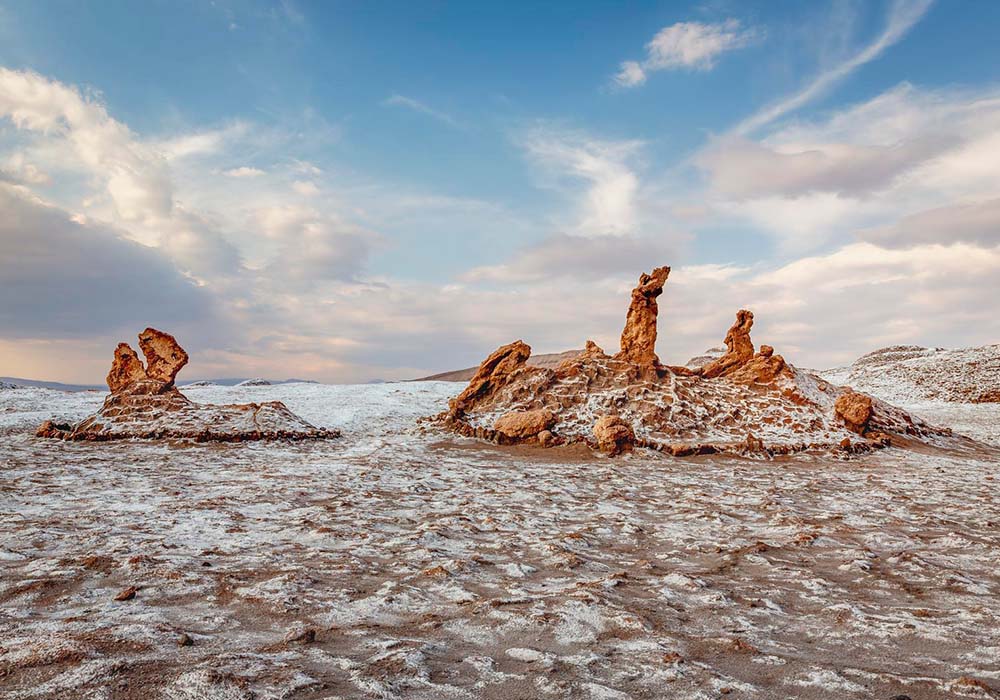
Adventure seekers will find plenty to do here. You can hike marked trails to surreal geological formations like the Tres Marías and Coyote Rock, or even mountain bike from town to the valley for an extra challenge. The vast dunes and rugged terrain make this a rewarding spot for exploration and sunset photography.
For an added adrenaline hit, the neighbouring Valle de Marte (Mars Valley) — also known locally as Death Valley — offers sandboarding down 100-metre-high dunes and off-road biking on sandy trails. Guided excursions to Moon Valley are widely available through operators in San Pedro, and pairing this tour with a stargazing session the same evening is a classic way to spend the day.
El Tatio geysers: a pre-dawn pilgrimage
El Tatio geyser field, with 80 active geysers spread across 10 square kilometres, is the third largest in the world and, at 4,320 metres elevation, the highest. Rising before dawn is the price of admission for the full experience — the dramatic temperature contrast between the freezing air and the superheated underground water produces towering steam plumes that can reach six metres high, and the scene at sunrise is genuinely theatrical.
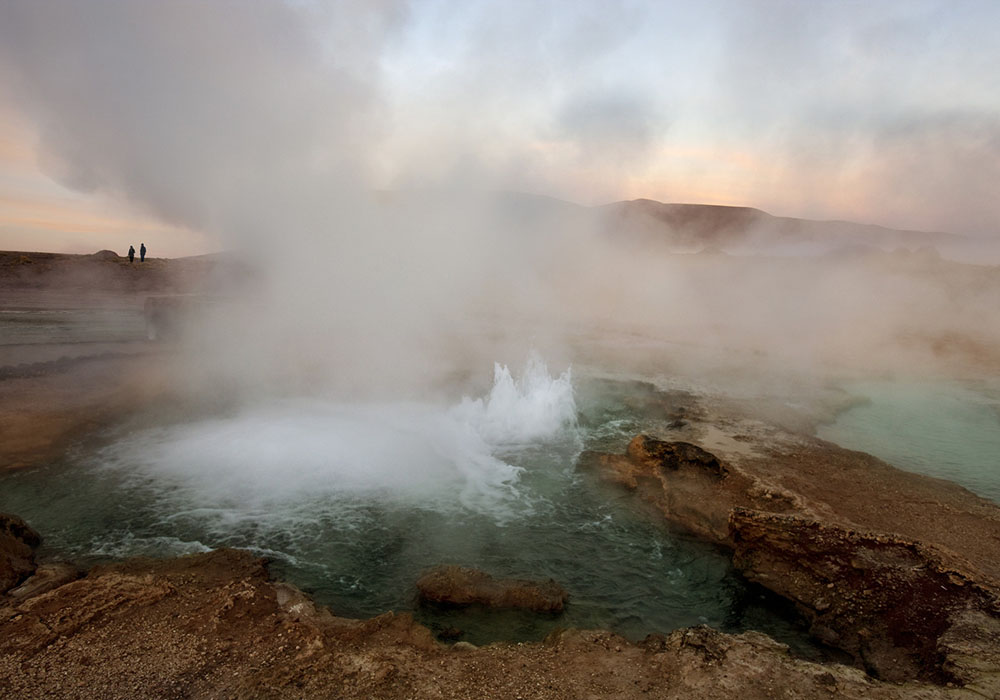
Tours typically involve pickup in San Pedro around 4:30 to 5:00 AM, a two-hour drive to the field, then a sunrise walk among the fumaroles and geysers. A hot breakfast cooked on-site is usually included, which is welcome after standing in sub-zero morning air. The drive back often passes through the Río Putana wetlands, where you'll spot flamingos and Andean geese feeding in the shallows.
A practical note: altitude sickness is a genuine risk at El Tatio, given how quickly tours climb from San Pedro (2,400 m) to the geyser field (4,320 m). Acclimatizing for a day or two in town before going is strongly recommended. Stay hydrated, avoid alcohol the night before, and go slowly.
Salt flats and high-altitude lagoons
The Salar de Atacama is Chile's largest salt flat, and it delivers on multiple fronts. Chaxa Lagoon, within the salt flat, is a classic spot to observe flamingos feeding in shallow waters, their vivid plumage contrasting brilliantly against the stark, crystalline landscape. As the day transitions to evening, the salt flat takes on a mesmerizing range of colours.
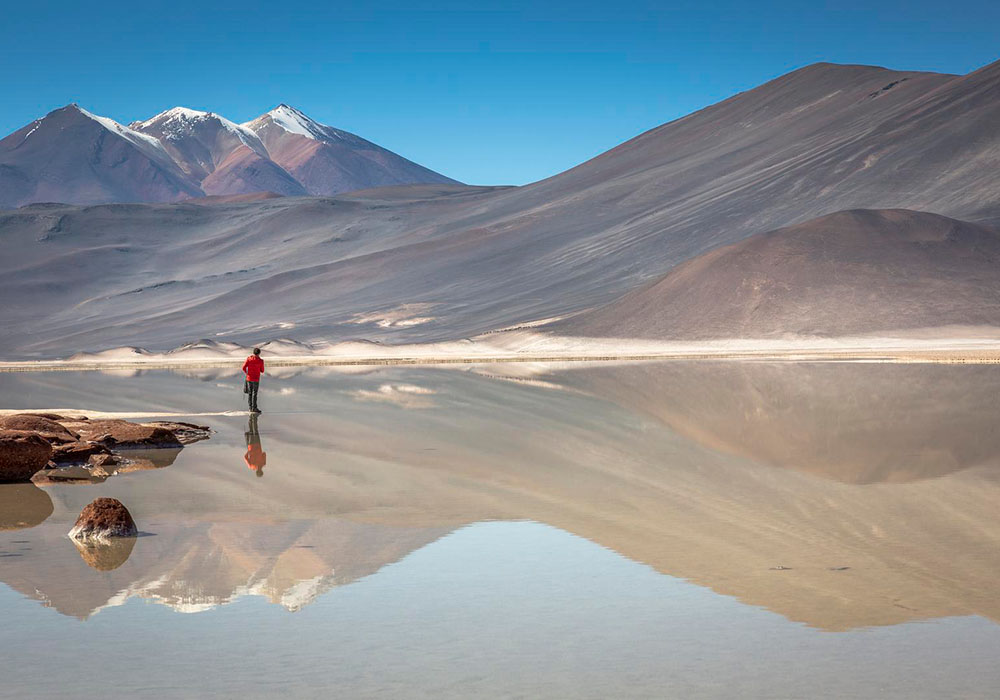
Further into the altiplano, the Lagunas Altiplánicas — including Miscanti and Miñiques — sit at around 4,000 metres and offer reflections of surrounding volcanoes in mirror-still waters. Piedras Rojas (Red Rocks) is another highlight: a surreal red-and-orange volcanic landscape that looks like it was designed by a set decorator.
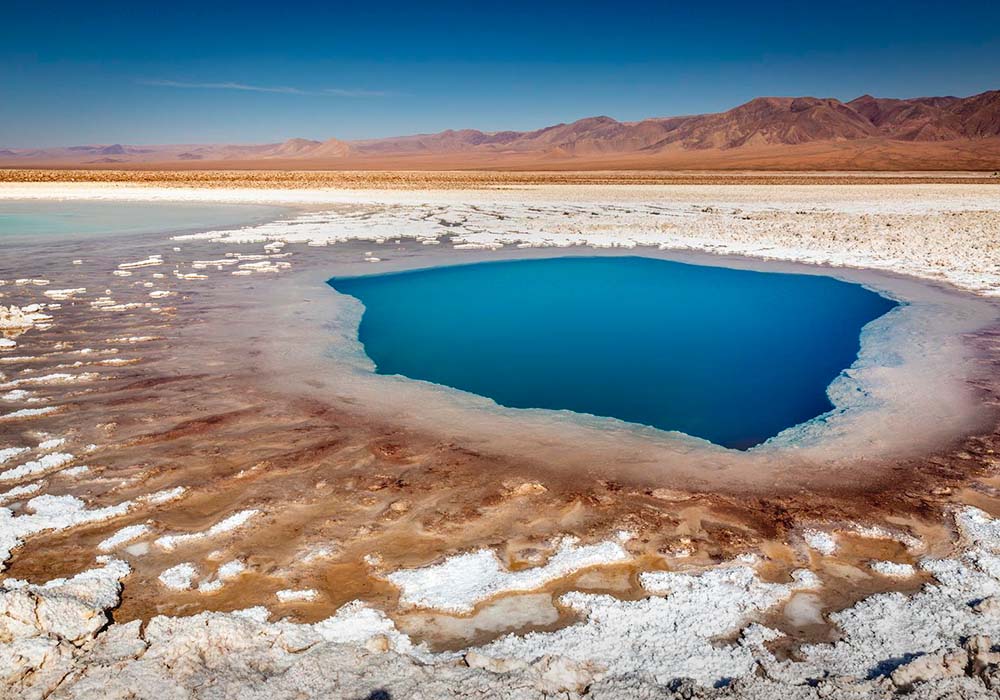
For something more active, Laguna Cejar and the hidden Baltinache lagoons offer a buoyancy surprise — the salt concentration is high enough to float you effortlessly, like a freshwater Dead Sea experience surrounded by desert.
Stargazing: The Atacama after dark
This is arguably what sets the Atacama apart from every other desert destination on Earth. With some of the clearest, darkest skies on the planet, the Atacama is a sanctuary for stargazers. The Milky Way shines in luminous detail, and planets and constellations feel unusually close.
Private stargazing sessions with local astronomers are widely available in and around San Pedro. These typically include high-powered telescopes, blankets, warm drinks, and commentary that stretches from Inca sky lore to modern cosmology. You may also visit an observatory to observe distant galaxies under professional guidance.
Timing matters: aim for nights around a new moon when the sky is at its darkest. Visiting during a new moon phase ensures optimal conditions for observing stars and celestial events. Tours usually run from around 8 PM to 11 PM and cost between $40 and $70 CAD.
Getting around and practical planning
San Pedro de Atacama is compact and easy to navigate on foot. For day trips, the most practical options are:
- Guided group tours from town (the most popular and affordable approach, with bilingual guides and hotel pickup included)
- Private tours (more flexibility, ideal for photography enthusiasts or those avoiding early starts)
- Self-drive (a rental car from Calama gives maximum independence, though many roads are unpaved and require 4WD)
Budget travellers can explore for around $121 CAD per day. Mid-range visitors should budget $160 to $240 per day for hotels, restaurants, and private tours. Luxury stays start at around $ 400 per night at high-end lodges.
A suggested order for a four-day stay:
| Day | Recommended activity |
|---|---|
| Day 1 | Arrive, acclimatize, Valle de la Luna sunset tour |
| Day 2 | Pre-dawn El Tatio geysers, afternoon rest, evening stargazing |
| Day 3 | Salar de Atacama + Chaxa flamingos + Lagunas Altiplánicas |
| Day 4 | Laguna Cejar or Baltinache float, explore San Pedro town |
Where to eat in San Pedro de Atacama
San Pedro's dining scene has come a long way. What was once a dusty strip of basic tourist menus is now home to a genuinely interesting culinary landscape, with flavours shaped by indigenous Atacameño traditions, Andean ingredients, and Chilean cooking technique.
Solar cooking, the use of local ingredients, and recipes that combine altiplano cuisine with South American preparations define the gastronomic identity of San Pedro de Atacama. Local ingredients worth seeking out include rica rica (an aromatic herb used in pisco sours and ice cream), llama meat, and blue potatoes. It's also worth noting that prices in town are higher than in the rest of Chile, so budgeting accordingly helps avoid surprises.
Here's a quick guide to reliable options across price points:
Budget
- Sol Inti offers a simple but well-made three-course set menu with generous portions, fresh ingredients, and beer on tap for around $7.50 USD per person.
- La Franchuteria is an unexpected treat: opened by a Frenchman who still runs the place, it has been going strong since the team first visited in 2017, serving genuine croissants, bread, and high-quality sandwiches.
Mid-range
- Adobe, open since August 1997, is one of the most popular restaurants in San Pedro — known for its atmospheric fire pit, live Andean music, and a menu that ranges from steak a lo pobre to Patagonian lamb kofte with local broad bean hummus and rica rica raita. Don't leave without a coca leaf or rica rica pisco sour.
- Las Delicias de Carmen draws locals and tourists alike with affordable, home-style Chilean dishes from soups and stews to roast meats, and the lunch specials are consistently considered the best value in San Pedro.
Splurge-worthy
- Baltinache is by far the standout upscale option, transformed after the pandemic when two young Bolivian sisters took over and brought their remarkable skills to the kitchen — one cooking, one running the floor — creating something truly special from indigenous-inspired dishes.
- Kunza, part of the Cumbres Hotel just outside town, earns the trip for its volcanic views, guanaco carpaccio, llama jerky, and fish cooked in Atacama salt, with pisco sours made to order at the outdoor fire pits under the stars.
For a cooling break on a hot afternoon, Heladería Babalú has been making homemade ice cream in distinctly desert flavours since 2005, including rica rica, quinoa, chanar chips, and cactus ayrampo. It's a reliable stop and a San Pedro institution.
Where to stay: From budget to eco-luxury
The Atacama has one of the more interesting accommodation ranges in South America, from social backpacker hostels on Calle Caracoles to some of the most architecturally considered eco-lodges on the continent. Here's how to think about each tier.
Budget: Hostels in San Pedro
The hostel scene in San Pedro is lively and well-suited to independent travellers. Most options sit within walking distance of the town centre, and staff are usually plugged into the tour operator network, so booking day trips is easy from your front door.
A few reliable picks:
- Hostal Campo Base is a practical desert refuge, a few steps from a grocery store, five minutes from the bus station, and ten minutes from the centre. The terrace is ideal for relaxing and comparing notes with fellow travellers after long desert tours.
- Backpackers San Pedro is a standout for meeting other travellers, with a campfire for chilly evenings, a strong community vibe, free Chilean drink nights, hammocks, and decent Wi-Fi — good enough to back up travel photos.
- EcoExplor Tours & Hostal is the pick for sustainability-minded budget travellers, with solar-powered rooms, organic linens, a zero-waste policy, and direct access to eco-tours and desert trekking.
- Anka Hostel strikes a good balance between social and peaceful: a friendly courtyard atmosphere, clean dorms and private rooms, secure lockers, a shared kitchen, and a short walk from the town centre.
Mid-range: Comfort with character
For travellers who want reliable comfort without the full-luxury price tag, San Pedro offers a solid mid-range tier in the $60-$150 CAD range. Properties like Hostal Montepardo and the various boutique guesthouses along and around Calle Caracoles offer well-appointed rooms with private bathrooms, garden spaces, and in-house breakfast. These properties tend to sit close enough to town for independence, while still providing the peace that makes desert mornings special.
Luxury: The eco-lodges
This is where the Atacama genuinely earns its place among the world's great adventure-travel destinations. The flagship properties here are internationally recognized, and they go well beyond good service — each is designed to immerse guests in the landscape.
The top-tier options currently operating:
-
Explora Atacama, a multi-award-winning 50-room lodge near San Pedro, includes all meals, spa facilities, four pools, and its own on-site observatory with guided star tours and explorations revealing the Milky Way and Andean constellations. Nearly 50 guided excursions are included in the stay, from horseback riding to high-elevation treks. The lodge was designed by acclaimed Chilean architect José Cruz Ovalle and sits on a 17-hectare desert estate with sweeping views and locally sourced furnishings.
-
Tierra Atacama, now part of the Baillie Lodges portfolio, is built to immerse guests in the landscape and the rich Atacameño culture. With its dedicated astronomy deck, guests enjoy unobstructed views of the night sky through professional telescopes. Spa treatments are inspired by desert elements, and the cuisine highlights locally sourced ingredients with Chilean flair.
-
Awasi Atacama is a Relais & Châteaux property offering private villas, each with a dedicated guide and vehicle. Personalized stargazing sessions and gourmet dining are part of the experience, and excursions can venture well off the beaten path.
-
Nayara Alto Atacama (formerly Alto Atacama) sits in the Catarpe Valley of the Salt Mountain Range, surrounded by natural beauty and tucked into a red rock canyon. It has an elevated stargazing platform with swivelling lounge chairs and an on-site astronomer who leads Milky Way tours. The property is also notable as the only luxury hotel in San Pedro holding Chile's 'S' certification for sustainable tourism.
| Property | Style | Best for |
|---|---|---|
| Explora Atacama | Large lodge, 50 rooms | Active travellers, guided adventures |
| Tierra Atacama | Boutique, cultural focus | Design-minded couples |
| Awasi Atacama | Villa-style, ultra-private | Luxury with total flexibility |
| Nayara Alto Atacama | Canyon setting, sustainability | Stargazing, families, and eco-conscious travellers |
The food of the altiplano: What to eat
Beyond restaurant recommendations, it's worth knowing which local ingredients and dishes define the region. The nortino stew is the protagonist of traditional ceremonies in San Pedro de Atacama — prepared with dried corn cooked for several hours, with beef, lamb, and pork fried in garlic, onion, and paprika. It's hearty and ideal after a long day of hiking in the cold.
Other things to order:
- Llama a lo pobre — llama steak topped with a fried egg, sautéed onions, and fries, a Chilean comfort dish with a regional twist
- Rica rica pisco sour — the local herb gives the classic Chilean cocktail a unique aromatic character
- Quinoa dishes — grown at altitude and incorporated into stews, salads, and side dishes throughout the region
- Empanadas — sold widely in town, they make a cheap and portable snack between excursions
When to go
The Atacama can be visited year-round, but conditions vary meaningfully by season.
- March to May and September to November are considered the sweet spots: pleasant daytime temperatures, fewer crowds than peak summer, and clear skies for stargazing.
- January and February are the peak tourist months, with the most congestion at major sites. They're also when the "Bolivian winter" can bring cloud cover and occasional afternoon thunderstorms to the altiplano.
- June and July are cold, particularly at night and at altitude, but the skies are crystal-clear, and the geyser steam columns are at their most dramatic in the frigid morning air.
A desert that earns every superlative
The Atacama rewards travellers who take it seriously. It's a destination that demands a little preparation — acclimatizing before high-altitude tours, planning your moon-phase timing for stargazing, and packing for 30-degree temperature swings between dawn and midday. But get those logistics right, and what you'll experience is a landscape that's both scientifically and aesthetically extraordinary.
The combination here is genuinely rare: a world-class natural spectacle accessible to every budget, a culinary scene that draws directly from indigenous tradition, and eco-lodges that belong on any shortlist of the world's great places to stay. Few destinations manage to deliver something meaningful to the backpacker sleeping in a hostel dormitory and the luxury traveller wrapped in a blanket at a private astronomy deck — the Atacama does both, and does them well.
Whether you're watching steam rise from the El Tatio geysers at sunrise, floating in the salty stillness of Laguna Cejar in the afternoon, or lying on your back watching the Milky Way appear directly overhead as the desert goes completely quiet after dark, this is one of those places that stays with you long after the altitude headache fades and the tan lines disappear. Come ready to be surprised by how alive the world's driest desert really is.