
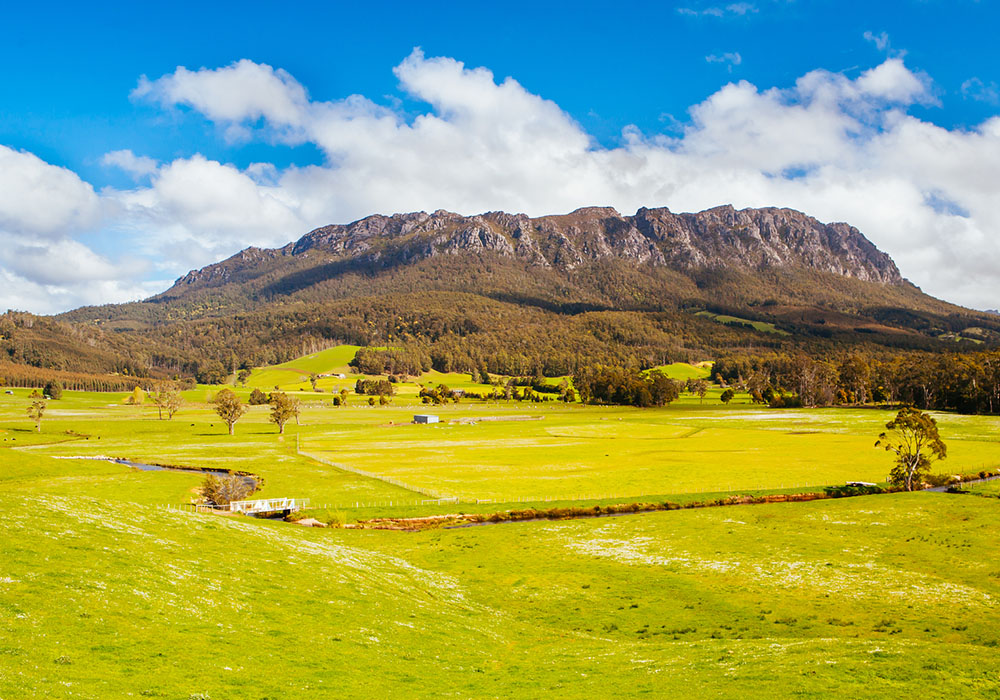
Tasmania, Australia's wild island state, rewards curious travellers with ancient rainforests, rugged coastlines, and endemic wildlife found nowhere else on Earth. Beyond the scenery, it offers rich Aboriginal cultural experiences, thriving farm-to-table dining, world-class cool-climate wines, and sustainable adventures across protected wilderness. From multi-day hikes along coastal cliffs to intimate artisan markets in historic towns, Tasmania delivers the kind of meaningful, unhurried travel that stays with you long after you've left.
Australia holds many surprises, but few destinations can concentrate so much raw beauty, cultural depth, and ecological wonder in a single place. Tasmania — the island state sitting just south of the mainland, separated by the famously stormy Bass Strait — is one of those rare destinations that genuinely delivers on its reputation. Roughly the size of Ireland, this compact island packs ancient rainforests, glacier-carved mountain ranges, windswept coastlines, and pristine river systems into a landscape that feels almost impossibly diverse.
The wildlife is extraordinary, including species that exist nowhere else on Earth. The food and drink scene rivals any major city. The Aboriginal culture here is among the world's oldest continuous cultures. And yet Tasmania remains refreshingly free of the overcrowding that plagues so many celebrated destinations.
Whether you're a seasoned adventurer chasing multi-day wilderness hikes, a food lover hunting for the best oyster spot on the Huon River, or a culturally curious traveller looking to connect with the Palawa people — Tasmania's original custodians — this island offers a depth of experience that rewards every kind of traveller.
This guide unpacks the essential elements of a Tasmanian journey: the landscapes, wildlife, heritage, adventures, and flavours that make this place unlike anywhere else in Australia.
Tasmania's landscape: Ancient, dramatic, and endlessly varied
Tasmania's terrain tells a story millions of years in the making. Volcanic activity, glaciation, and the relentless forces of wind and ocean have sculpted a landscape of dramatic contrasts, from the dolerite columns of the Tasman Peninsula rising sharply from the sea to the button-grass plains of the Southwest stretching endlessly toward the horizon.
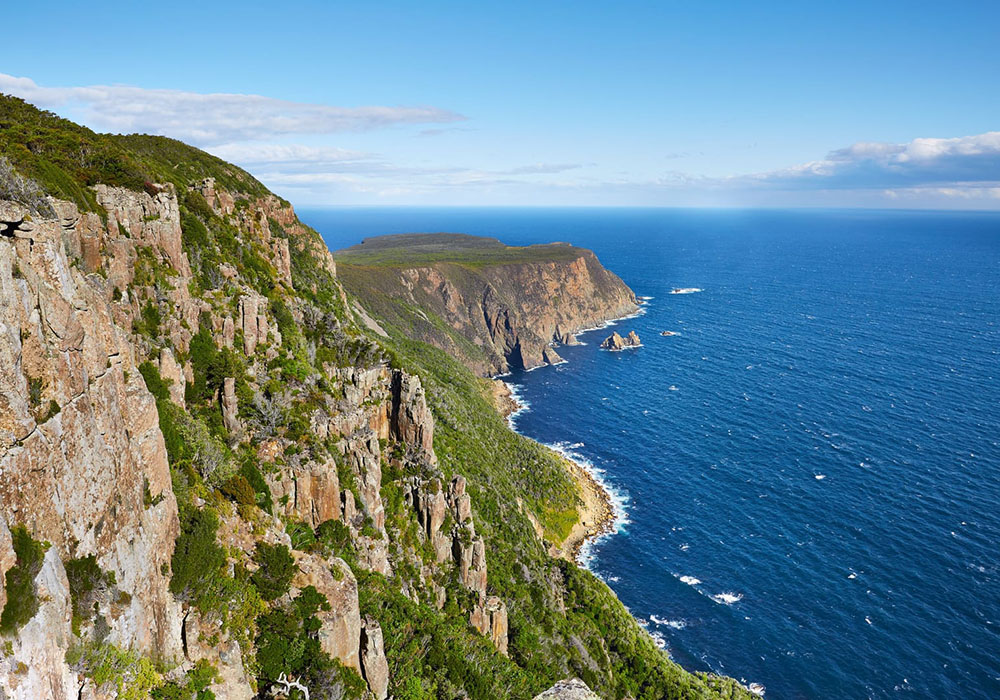
The island sits at the convergence of Southern Ocean weather systems, which means its weather can shift quickly and dramatically. This climatic intensity, though challenging for unprepared visitors, is precisely what keeps the landscape so lush, green, and alive. Rainfall feeds ancient river systems and dense temperate rainforests, where trees like King Billy Pine and Huon Pine — some of the oldest living organisms on Earth — grow in quiet, moss-covered silence.
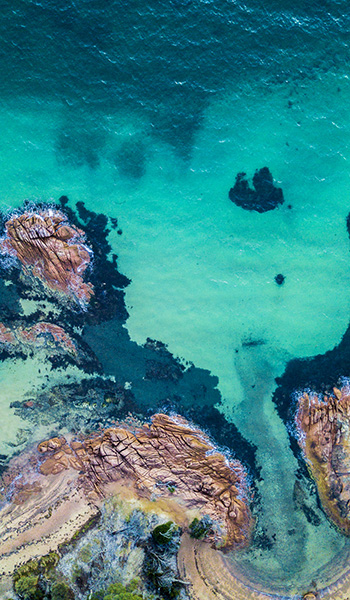
What makes the landscape truly special is its variety within a relatively small area. You can stand on a white-sand beach framed by pink granite boulders in the morning and be hiking through a subalpine wilderness by afternoon.
Key natural features include:
- Coastal cliffs rising sharply from the sea, offering panoramic views across the Southern Ocean
- Ancient temperate rainforests filled with towering eucalyptus, myrtle, and celery-top pine
- Snow-capped mountain ranges in winter, drawing skiers and alpine hikers alike
- Clear rivers and glacial lakes support native fish, waterbirds, and endemic species
- Wildflower meadows bursting into colour each spring with native orchids and peppermint
| Feature | Description | Example location |
|---|---|---|
| Coastal cliffs | Steep dolerite formations with sweeping ocean views | Tasman Peninsula |
| Ancient rainforest | Dense cool-temperate forests with millennial-old trees | Franklin-Gordon Wild Rivers National Park |
| Mountain ranges | Snow-capped peaks, alpine lakes, and subalpine plains | Cradle Mountain-Lake St Clair |
| Clear rivers | Freshwater habitats with native trout and platypus | Derwent River |
Iconic national parks worth building your trip around
Tasmania's national parks are the backbone of any serious visit to the island. Together, they protect over 40% of Tasmania's landmass — an extraordinary figure that reflects the island's deep commitment to conservation. Each park has its own personality and drawcards.
- Cradle Mountain-Lake St Clair National Park: Perhaps the most iconic, this park is home to the jagged dolerite peaks of Cradle Mountain and the deep glacial waters of Lake St Clair, Australia's deepest lake. The Overland Track — one of Australia's great long-distance walks — passes through its heart.
- Freycinet National Park: On the east coast, Freycinet is defined by its extraordinary pink granite mountains, the famous white crescent of Wineglass Bay, and calm turquoise waters ideal for kayaking.
- Southwest National Park: The largest park in Tasmania, this is genuine wilderness — wild rivers, impenetrable buttongrass plains, and ancient Huon Pines in valleys untouched by logging.
- Mount Field National Park: Just an hour from Hobart, Mount Field offers towering swamp gums (the world's tallest flowering plants), beautiful tiered waterfalls, and accessible walks suitable for all fitness levels.
| Park name | Key features | Popular activities |
|---|---|---|
| Cradle Mountain-Lake St Clair | Mountain peaks, glacial lakes | Hiking, wildlife spotting |
| Freycinet | Pink granite, Wineglass Bay | Beach walks, kayaking |
| Southwest | Wild rivers, ancient forests | Backcountry trekking |
| Mount Field | Waterfalls, giant swamp gums | Short walks, birdwatching |
Untouched wilderness areas: Tasmania's best-kept secret
Beyond the national parks, large swathes of Tasmania remain genuinely remote — places where human impact has been minimal, and nature continues largely on its own terms. These areas sit within the Tasmanian Wilderness World Heritage Area, one of the largest temperate wilderness regions in the Southern Hemisphere.
The Franklin-Gordon Wild Rivers Wilderness and the Arthur-Pieman Conservation Area on the northwest coast are among the most striking of these zones — coastal heathlands, wind-sculpted sand dunes, and river systems that flow through ancient forests with little interruption. Exploring them requires preparation, respect for strict Leave No Trace principles, and often a willingness to navigate unmarked terrain. For experienced hikers and adventurers, that effort is its own reward.
- Rare animals like the Tasmanian devil are regularly spotted in these undisturbed habitats
- Native plants, including many endemic species, thrive without the pressure of invasive species
- Unmarked trails challenge and reward those with the experience to tackle them safely
Rich flora and fauna: A living museum of endemism
Tasmania's long geographic isolation, which separated it from mainland Australia around 10,000 years ago as sea levels rose, has produced a remarkable array of species found nowhere else in the world. The island functions as a kind of living museum, where evolutionary paths diverged from the mainland and produced animals and plants uniquely adapted to Tasmania's cool, wet, and often unpredictable conditions.
Endemic species you might encounter
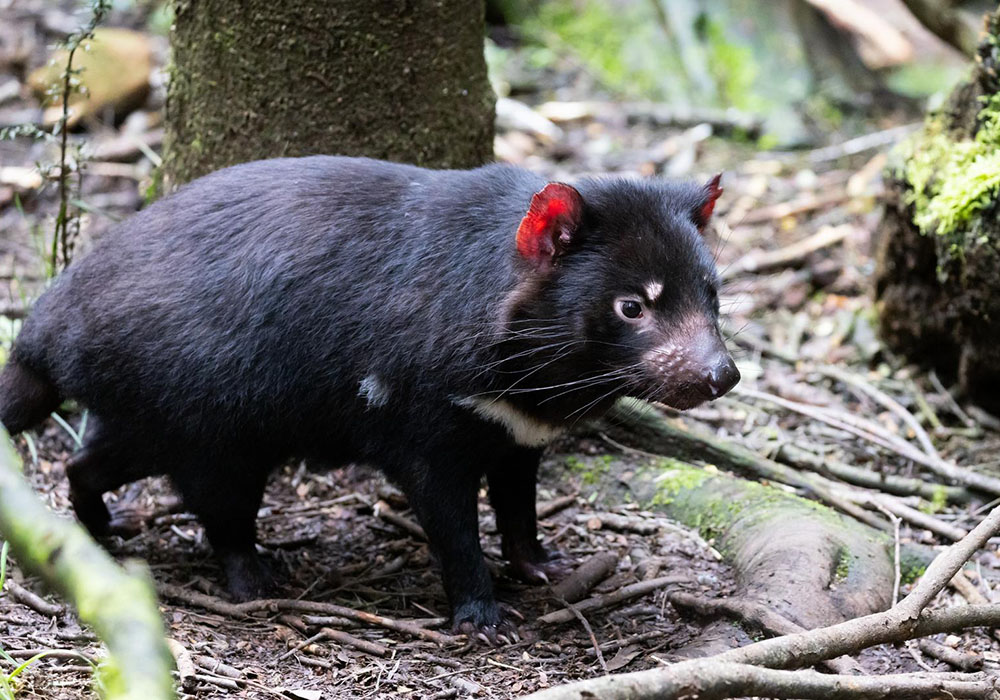
The Tasmanian devil is the most famous of these creatures — a powerful, stout marsupial with a fearsome feeding style and an unmistakable screech. Once widespread across mainland Australia, it now survives only in Tasmania, where conservation programs have worked to protect it from Devil Facial Tumour Disease (DFTD), a contagious cancer that threatened to devastate wild populations.
Other notable endemic species include:
- Eastern quoll: A small, spotted carnivorous marsupial, largely nocturnal and increasingly rare on the Australian mainland
- Tasmanian wedge-tailed eagle: A large, powerful raptor and subspecies of the mainland wedge-tailed eagle, adapted to Tasmania's forested landscapes
- Tasmanian blue gum: The floral emblem of Tasmania, a towering eucalyptus species and a cornerstone of many forest ecosystems
Birdwatching and marine wildlife
For birdwatchers, Tasmania is a serious destination. The forty-spotted pardalote — tiny, rare, and found only in a handful of locations — is a prized sighting. The orange-bellied parrot, one of Australia's most endangered birds, migrates between Tasmania and the mainland in small, fragile numbers. Along the coast, little penguins (the world's smallest penguin species) come ashore at dusk to roost in burrows, offering unforgettable wildlife encounters for patient observers.
Offshore, the marine environment is equally rich. Australian fur seals haul out on rocky outcrops along the southern and eastern coasts. Weedy sea dragons drift through kelp forests in their extraordinary camouflage. Whale watching is also possible seasonally, with southern right whales and humpbacks passing through Tasmanian waters.
| Marine species | Description |
|---|---|
| Australian fur seal | Playful and curious, common on rocky southern shores |
| Weedy sea dragon | Brilliantly camouflaged in kelp forests along the east coast |
| Little penguin | Smallest penguin species; nests along sheltered coastlines |
Aboriginal heritage and culture: A connection 40,000 years in the making
The Palawa people, Tasmania's First Nations community, have maintained a continuous relationship with this land for over 40,000 years. Their presence predates European settlement by millennia, and their cultural traditions, language, art, and knowledge systems remain very much alive today. For visitors, engaging with this heritage offers one of the most meaningful and humbling experiences Tasmania has to offer.
Ancient traditions and cultural practices
Palawa traditions were always deeply linked to the rhythms of the natural world. Seasonal movement between coastal and inland areas, sophisticated fire management practices, complex tool-making traditions, and rich ceremonial life all formed the foundation of Palawa society. These were people who understood their environment with extraordinary depth — and that knowledge continues to be passed down through communities today.
Key elements of these traditions include:
- Seasonal cycles: Movements and activities were guided by the seasons to manage food sources and maintain environmental health
- Fire management: Controlled burning was a sophisticated ecological tool, used to encourage new plant growth and attract animals
- Tool-making: Stone, bone, and plant materials were crafted into tools for hunting, fishing, and daily life
- Spiritual connection: Ancestral relationships with land, sea, and sky were central to Palawa identity and cosmology
Cultural sites to visit
Tasmania holds numerous sites of deep Aboriginal significance, many of which are accessible to respectful visitors. Rocky Cape National Park on the northwest coast contains some of the oldest Aboriginal middens in Australia — ancient shell deposits that reveal thousands of years of coastal food practice. Bruny Island holds significant archaeological sites along its sheltered coastlines. Risdon Cove, just north of Hobart, carries particular historical weight as the site of one of the earliest and most violent encounters between Palawa people and European settlers.
| Site | Description | Location |
|---|---|---|
| Rocky Cape National Park | Ancient middens and shell deposits | Northwest Tasmania |
| Bruny Island | Archaeological sites and coastal campsites | South of Hobart |
| Risdon Cove | Significant Aboriginal historical site | Near Hobart |
Aboriginal-led tours and experiences
The most meaningful way to engage with Palawa culture is through experiences designed and led by Aboriginal people themselves. Several outstanding options are currently operating:
- takara nipaluna (Blak Led Tours): An impactful 90-minute walking tour of Nipaluna/Hobart led by Palawa and Warlpiri woman Nunami Sculthorpe-Green. The only Aboriginal-led tour of Hobart, it traces the route of Aboriginal resistance members in 1832 and offers a truth-telling perspective on the city's history.
- wukalina Walk: A four-day, three-night Palawa-owned and operated guided walk along the northeast coast, combining storytelling, cultural immersion, and spectacular coastal scenery between wukalina (Mt William) and Larapuna (Bay of Fires). Listed on TIME's World's Greatest Places.
- Palawa Kipli (kipli takara tours): A 60-90 minute bush tucker walk at Risdon Cove, led by Palawa guides, focusing on traditional food plants and cultural land management practices.
Aboriginal art remains a vital medium for cultural expression, carrying stories of ancestors, country, and law across generations. Community events and festivals periodically showcase performances, music, weaving, and contemporary visual art — check local event calendars when planning your visit.
Outdoor adventures: From epic hikes to coastal paddling
Tasmania's landscapes are made for physical exploration. The island's trail network ranges from short, accessible walks to serious multi-day expeditions through remote wilderness, and its waterways offer everything from calm paddling to world-class surf breaks.
Hiking and trekking trails
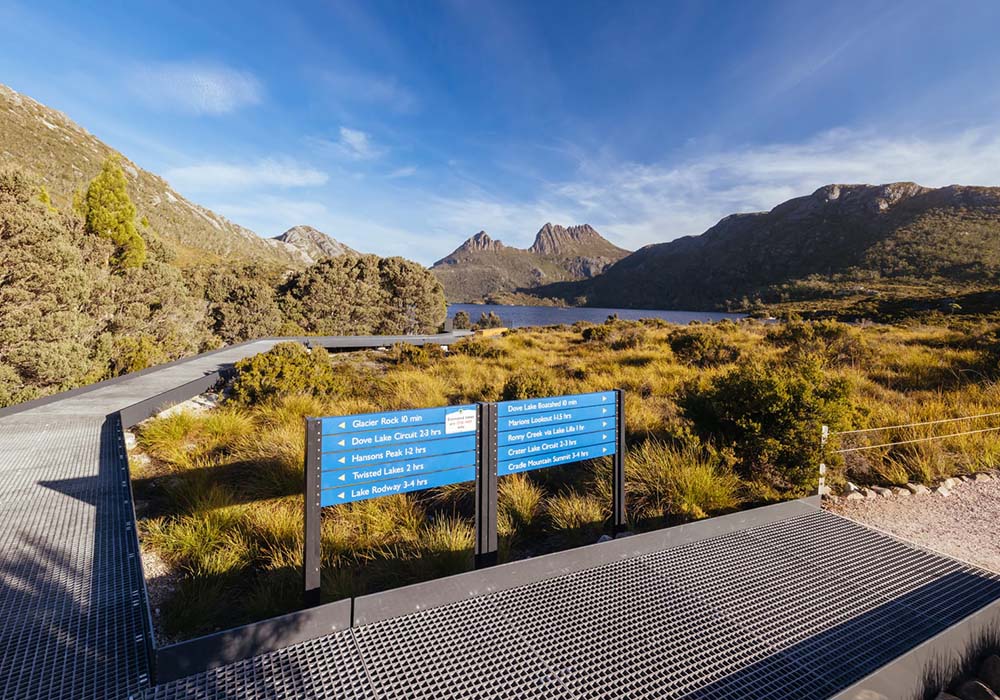
The hiking here is genuinely world-class. The Overland Track — 65 kilometres through Cradle Mountain-Lake St Clair National Park — takes around six days to complete and passes through some of the most striking alpine and subalpine scenery in Australia. Bookings are essential in peak season, and walkers must carry all supplies. The Three Capes Track on the Tasman Peninsula is a more recently developed 46-kilometre coastal walk over four days, featuring dramatic sea cliff views and comfortable huts. For something more accessible, the trails around Maria Island blend wildlife encounters (wombats and Cape Barren geese are virtually tame here) with fascinating convict history.
Hikers should carry water, weather-appropriate layers, and navigation tools. Tasmania's weather is famously variable, and conditions can change rapidly even in summer.
Water sports and fishing
Tasmania's waterways are a genuine adventure playground. The Huon River south of Hobart and the calm waters around Freycinet National Park are popular destinations for sea kayaking, where paddlers can explore sea caves, isolated beaches, and kelp forests at a relaxed pace. Shipstern Bluff on the Tasman Peninsula is one of Australia's most challenging surf breaks, drawing experienced surfers seeking powerful, technical waves.
Freshwater fishing for brown and rainbow trout is exceptional across Tasmania's highland lakes and rivers, and saltwater fishing for species including flathead, bream, and abalone is popular along the coast. Fishing licences are required in designated areas. Guided fishing tours are widely available for those who prefer an expert-led approach.
Camping and eco-tourism
Camping in Tasmania connects you to the environment in ways no hotel can. Facilities range from basic bush campsites in remote national parks to more comfortable eco-camps and glamping setups near popular destinations. Maria Island and Cradle Mountain both offer glamping options for those who want a softer version of the wilderness experience without sacrificing the setting.
| Camping type | Features | Best locations |
|---|---|---|
| Basic camping | Minimal facilities, full immersion in nature | Freycinet, Walls of Jerusalem |
| Glamping | Comfortable beds, private bathrooms | Maria Island, Cradle Mountain |
| Eco camping | Low-impact, sustainable practices | Southwest National Park, Tarkine |
Book well ahead during peak season (December to February). Strict park regulations apply across all sites — follow them carefully to protect the landscapes everyone comes to experience.
Tasmania's hidden towns: History, markets, and artisan culture
Venture beyond the national parks and you'll find a network of small towns that carry their own quiet magic. These are places where Georgian sandstone buildings line quiet main streets, weekend markets spill out onto heritage footpaths, and local artists and craftspeople have been quietly building creative communities for decades.
Historic settlements
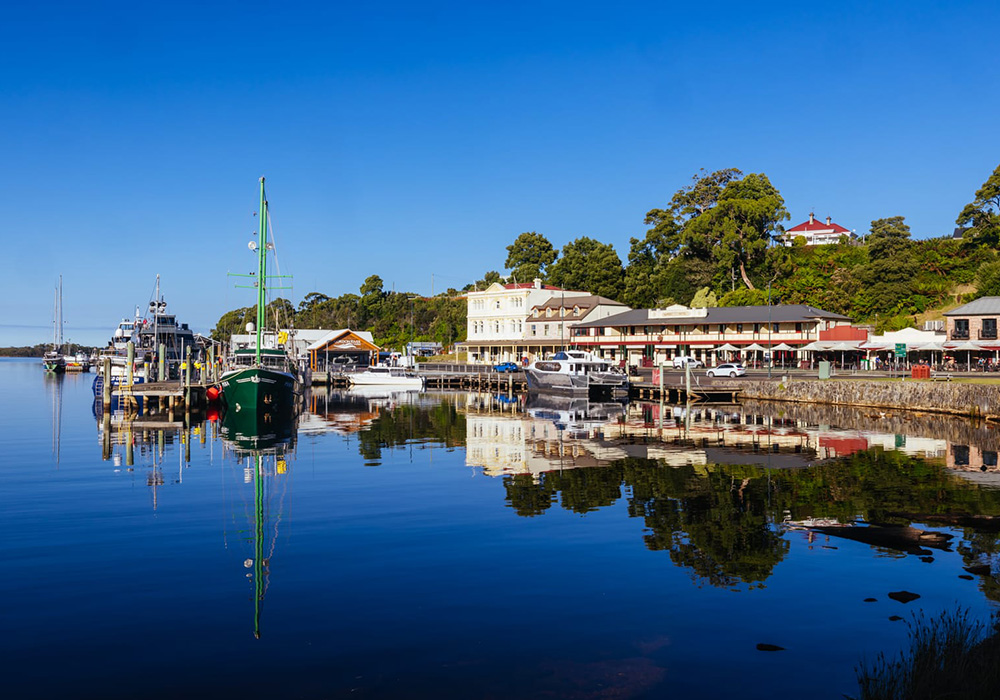
Several of Tasmania's towns date to the earliest years of European settlement, when convict labour and free settler enterprise shaped the island's character. Richmond, about 25 kilometres northeast of Hobart, is famous for its intact colonial streetscape and Australia's oldest surviving bridge, built by convict labour in 1823. Ross, in the Midlands, centres on its own convict-built bridge and offers a beautifully preserved village atmosphere. Evandale, near Launceston, hosts one of Tasmania's most popular Sunday markets and an impressive collection of Georgian and Victorian architecture.
| Town | Main attraction | Historic era |
|---|---|---|
| Richmond | Oldest bridge, colonial buildings | Early 1800s |
| Ross | Convict bridge, village atmosphere | Mid 1800s |
| Evandale | Sunday market, historic homes | 19th century |
Local markets and cuisine
Markets are central to Tasmanian food culture, connecting producers directly with visitors and locals alike. The Salamanca Market in Hobart — running every Saturday from 8:30 am to 3 pm along historic Salamanca Place — is Tasmania's most visited tourist attraction, drawing between 25,000 and 40,000 people each week. With over 300 stalls selling local produce, handmade goods, artisan cheeses, fresh bread, Tasmanian gins, and much more, it's a genuine showcase of island creativity and flavour.
Smaller markets in towns like Evandale and Deloraine offer a more intimate experience, with seasonal produce and locally made goods reflecting the rhythms of Tasmanian life.
Common market finds by season:
| Season | Common market items |
|---|---|
| Spring | Strawberries, asparagus, spring lamb |
| Summer | Cherries, berries, fresh fish |
| Autumn | Apples, pumpkins, wild mushrooms |
| Winter | Root vegetables, game meats, aged cheeses |
Artisan communities
Towns like Oatlands and Deloraine have quietly become hubs for Tasmanian artisan culture. Potters, woodworkers, textile artists, jewellers, and painters work out of studios and small galleries, many of which are open to visitors. Workshops and studio visits give travellers the rare chance to meet makers directly, see the creative process, and purchase work that carries a genuine story. Art festivals, including the excellent Deloraine Craft Fair held each November, celebrate this community annually.
Food and drink: Tasmania's table is worth the trip alone
Tasmania has earned serious recognition as one of Australia's finest food and wine destinations, and that reputation is well deserved. The cool climate, clean air, and pristine growing conditions produce ingredients of exceptional quality. Restaurants, from Hobart's sophisticated dining scene to simple roadside farmstalls, take full advantage of what the island grows.
Fresh local produce
The diversity and quality of Tasmanian produce is remarkable. Wild-caught abalone, freshly shucked Bruny Island oysters, and Atlantic salmon from east coast farms are local staples. The Huon Valley produces award-winning apples, cherries, and stone fruit. Dairy farms across the island yield rich milk, butter, and cheeses that regularly win national awards. Many restaurants source directly from local farms and fishermen, so menus change with the seasons — and that freshness shows in every plate.
| Produce | Best season | Region |
|---|---|---|
| Apples | Autumn | Huon Valley |
| Oysters | Year-round | Bruny Island |
| Atlantic salmon | Winter | East Coast |
| Cherries | Summer | Derwent Valley |
Wine and craft beer
Tasmania's cool-climate wine scene has grown from a cottage industry into something genuinely compelling. The Tamar Valley, Coal River Valley, and Pipers River regions produce Pinot Noir and sparkling wines of exceptional elegance — frequently rated among Australia's best. Chardonnay and Riesling also perform brilliantly in the island's cooler conditions.
The craft beer and spirits scene has grown alongside the wine industry. Tasmanian distilleries — including several in and around Hobart — have won international recognition for whisky and gin. Breweries use the island's famously clean water and local hops to produce everything from crisp pilsners to complex barrel-aged stouts.
| Drink | Characteristic | Notable area |
|---|---|---|
| Pinot Noir | Light, fruity, elegant | Tamar Valley |
| Sparkling wine | Crisp, refreshing, fine bubbles | Coal River Valley |
| Craft beer | Varied styles using local ingredients | Hobart and surrounds |
| Single malt whisky | Rich, complex, award-winning | Hobart distilleries |
Farm-to-table experiences
A growing number of farms and small producers in Tasmania invite visitors to experience food at its source. These are genuine farm-to-table encounters — picking strawberries at a Huon Valley berry farm, joining a cheese-making session at a small dairy, or sitting down to a long lunch at a winery where the grapes grew just beyond the window. Cooking classes using seasonal produce are offered at several farm stays and culinary centres across the island.
Visitors can expect:
- Relaxed dining in rustic, often spectacular settings
- Direct conversations with the farmers and chefs behind their meals
- Dishes and flavours that genuinely reflect Tasmania's seasons and place
Still thinking about Tasmania? That's the point
Tasmania earns its place in the memory less through any single experience and more through the accumulation of them. The morning light on Cradle Mountain. The silence of a Franklin River gorge. The warmth of a market stall conversation over a cup of freshly brewed Tasmanian coffee. The disbelief that an oyster pulled from these waters could taste quite so good.
What sets the island apart from other Australian destinations is the way it rewards depth. The longer you stay, the more you find — hidden walking tracks, obscure art galleries in converted shearing sheds, a farm that makes cheese the way it was made a hundred years ago. Tasmania resists the quick-pass itinerary and rewards those who choose to slow down, put the phone away, and pay attention.
The island has been shaped by isolation, ancient geology, extraordinary biodiversity, and tens of thousands of years of human culture. Getting under the surface of all that takes time. And it's absolutely worth it. Pack your walking boots, keep your itinerary flexible, and plan to stay longer than you think you need to. Tasmania has a way of rearranging your plans — and you'll be glad it did.