

From June 6 to 28, 2026, Paris's oldest bridge becomes something entirely unexpected. French artist JR is transforming the Pont Neuf into a dramatic rocky cavern, free, open 24/7 and visible from the Seine. Paying tribute to Christo and Jeanne-Claude's legendary 1985 wrapping, the installation weaves together monumental sculpture, immersive sound by Thomas Bangalter and augmented reality by Snap Inc. into one breathtaking, ephemeral experience.
Paris has always had a particular gift for the grand gesture. From Haussmann's boulevards to Eiffel's iron tower to Christo and Jeanne-Claude wrapping the Pont Neuf in 40,000 square metres of golden fabric in 1985, the city has never been shy about reimagining itself. This summer, it does so again. From June 6 to 28, 2026, French artist JR will transform the Pont Neuf, Paris's oldest standing bridge, into a colossal rocky cavern rising up to 18 metres above the Seine.
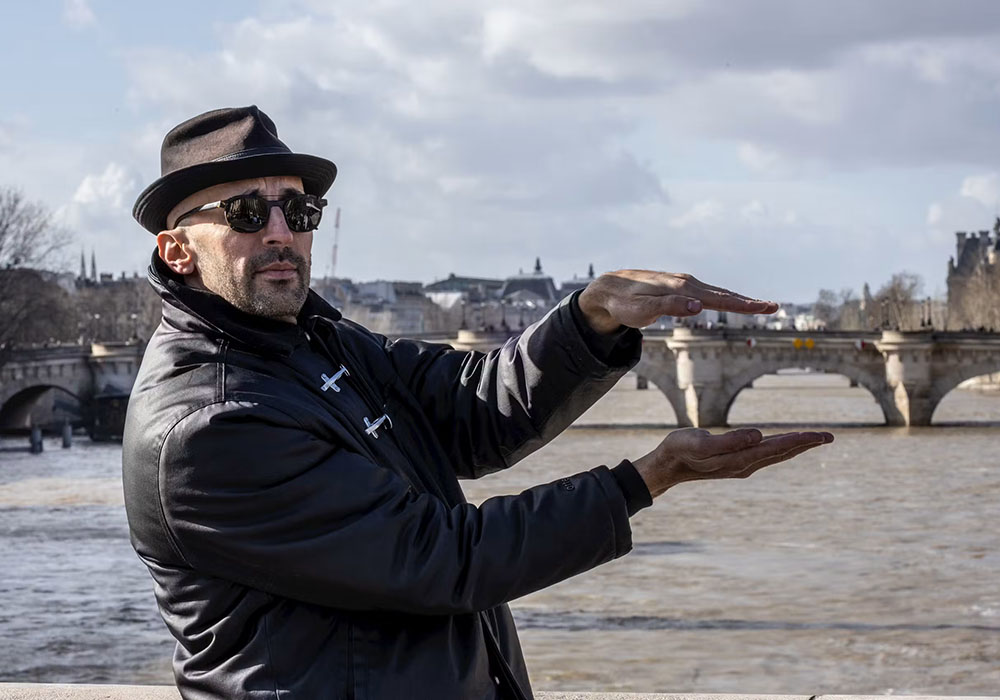
The work is titled La Caverne du Pont Neuf, and it carries the weight of both artistic history and urgent contemporary meaning. On view from June 6 to 28, the installation pays tribute to Christo and Jeanne-Claude's The Pont Neuf Wrapped, which marked its fortieth anniversary in 2025, and offers Parisians and visitors a time-limited opportunity to experience an ephemeral reimagining of the city's oldest bridge. Crucially, the work is entirely free. The installation will not use any government funding, relying instead on the sale of JR's works and private support from Snap Inc., Bloomberg Philanthropies, Paris Aéroport and Salesforce. It will be open around the clock, every day of its three-week run.
For travellers planning a trip to Paris this June, the timing is singular. This is the kind of event that defines a cultural moment: temporary by design, impossible to replicate, and free to anyone who shows up.
The bridge, the quarry and the idea
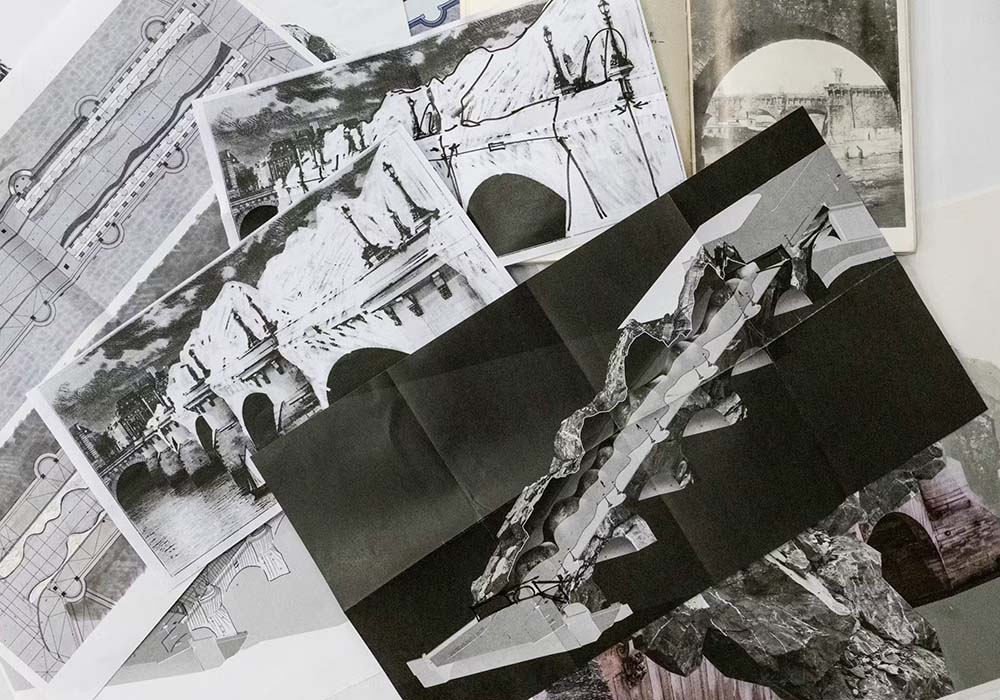
JR's vision for the project was inspired by the quarries from which the bridge's stones were extracted, emphasizing the origins of Paris's historic architecture. The artwork juxtaposes the raw and wild with the refined elegance of the City of Light, creating a dialogue between the past and the present.
The Pont Neuf, which translates to "New Bridge," was completed in 1607 and was the first bridge in Paris built entirely of Lutetian limestone, known as Paris stone. The bridge's limestone was sourced from quarries in the Paris Basin and was used to build many of Paris's buildings and landmarks. It was also the first bridge in the city to include paved sidewalks, facilitating pedestrian use and Parisian street life.
By returning the bridge visually to its geological origins, JR creates something quietly philosophical. The stone that built a city re-emerges over the water that runs beneath it — ancient material reclaiming its form, if only for a few weeks.
As JR himself puts it: "My vision for this project is rooted in both the past and present of this iconic bridge. I was very inspired by the artistic vision of Christo and Jeanne-Claude, and I share their idea that the mission of art is to make the public think, or rethink about the familiar. The debate that a project in a public space can provoke is of equal value to its artistic realization. Art is a transformation and a way of renewing the way we look at the world around us."
An artistic cycle six years in the making
La Caverne du Pont Neuf arrives as the culmination of a body of work JR has been building since 2020, much of it shaped by the social fractures of the pandemic years. During this cycle, JR has continually questioned the growing disconnection and isolation among citizens, particularly exacerbated by the pandemic and successive lockdowns. It is in this spirit that he created several trompe-l'oeil artworks, creating breaches in the facades of iconic buildings, with La Ferita in Florence (2021), Punto de Fuga in Rome (2021) and La Nascita in Milan (2024).
Timelapse of the inflation of La Caverne du Pont Neuf. Paris, May 2026.
This approach also inspired Retour à la Caverne (Return to the Cave) on the facade of the Paris Opera in 2023. The Palais Garnier installation encouraged viewers to return to a romanticism inspired by the natural world. The cave beckoned viewers to peer inside, invoking Plato's allegory—a place where the exit leads to knowledge and understanding of the world.
The two acts of Retour à la Caverne, which ultimately came to life in a performance involving 153 dancers, are the prelude to what La Caverne du Pont Neuf will conclude. With the transformation of the iconic bridge into a cave, JR aims to accompany a movement inviting citizens to abandon blindness and isolationism in favour of lucidity, togetherness and concord among all.
What the installation actually looks like
The scale of the work is remarkable. La Caverne du Pont Neuf will cover 2,400 square metres of floor space, measuring 120 metres long and 20 metres wide, with the highest points of the structure ranging from 12 to 18 metres in height.
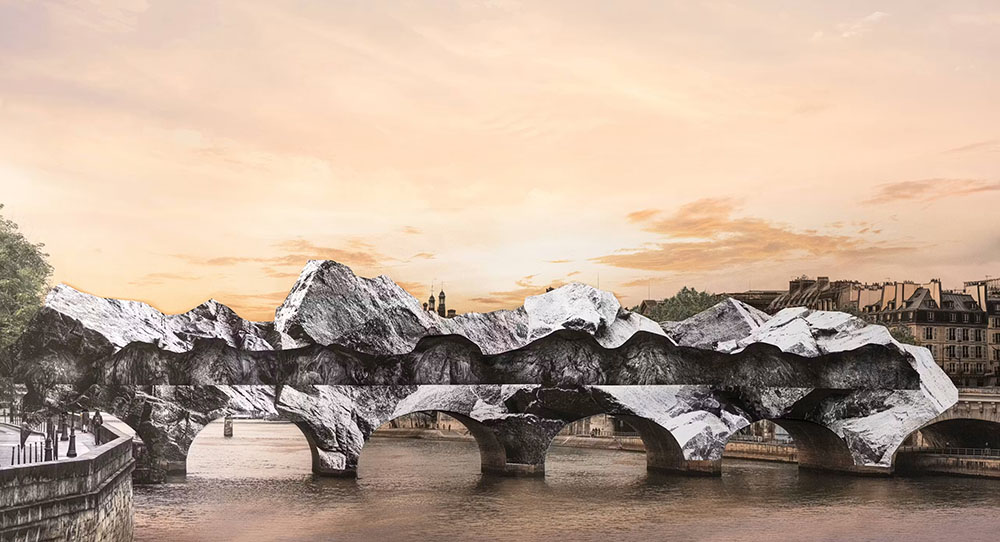
Air is the main material of the work. The structure is based on a monumental double-walled inflatable system with permanent ventilation. Slightly pressurized air fills 80 structural canvas arches, shaping the exterior of La Caverne du Pont Neuf, while printed fabric over the arches creates a sculptural trompe-l'oeil effect, giving the structure a rocky appearance.
The result is a structure that weighs up to five tonnes, yet requires no foundations, meaning the historic fabric of the bridge remains entirely untouched. The structure will require 18,900 square metres of fabric and 20,000 cubic metres of air.
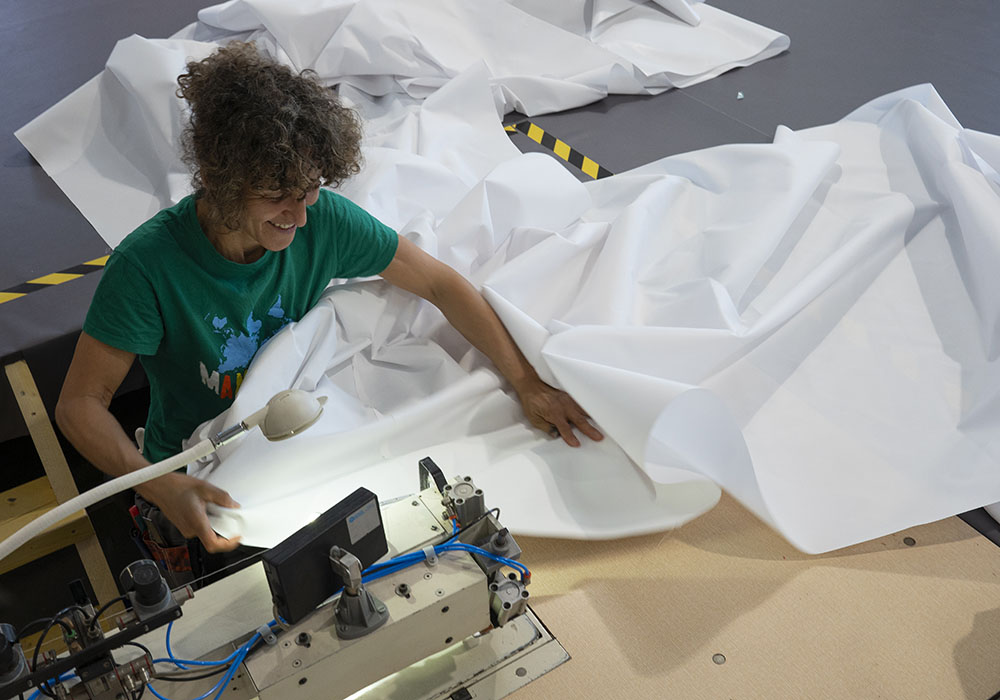
The interior space, which visitors can wander inside, will be a world first in this dimension. Made of lightweight fabric weighing 160 g/m², sewn into shapes and held in place by suction, the fabric will literally float in the air, secured to metal gantries to meet all safety requirements.
The whole construction was tested at full scale in January 2026. JR and his team deployed a 15-metre-high prototype at a historic hangar at Orly Airport to test all technical and artistic components of the artwork, adjusting aspects related to the structure, cladding, lighting and sound.
Sound by Thomas Bangalter, augmented reality by Snap
The experience inside La Caverne goes well beyond the visual. JR invited Thomas Bangalter, a former member of the duo Daft Punk, to imagine the sound dimension of the installation. As an acoustic plastic artist, Bangalter sought to envelop La Caverne du Pont Neuf in a fabric that would be sonic without actually being music, conceiving a texture that is both minimal and maximal, in line with the work of art as a whole.
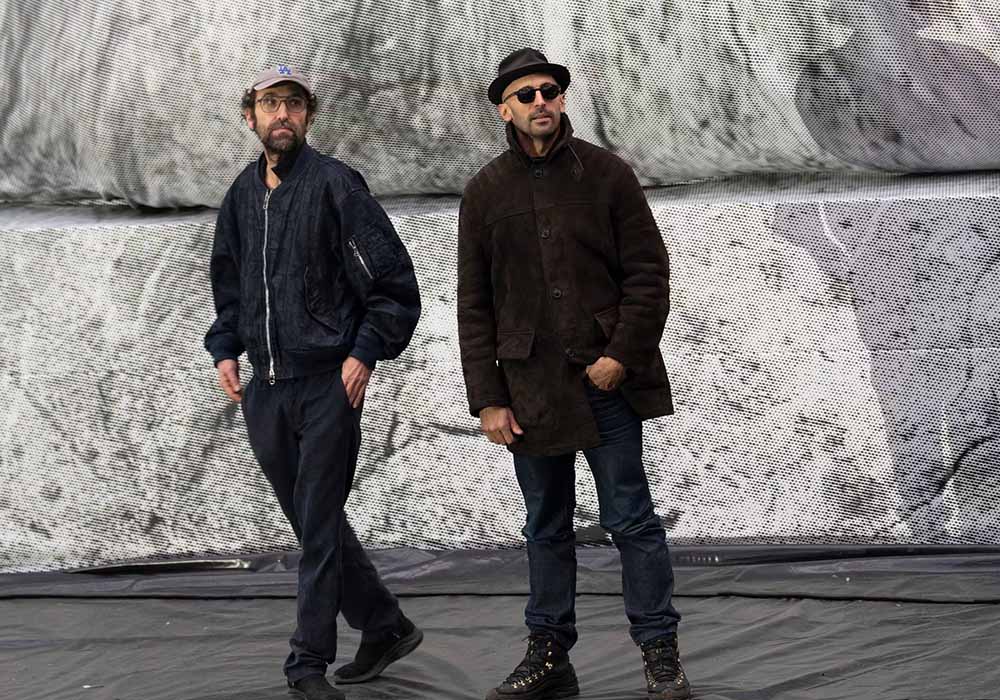
Bangalter has described his intention as sculpting a sound material from electroacoustic elements, whose resonance will "mineralize" the structure of La Caverne with a monolithic and mystical quality.
The visual dimension of the experience extends further still, through a collaboration with Snap Inc.'s AR Studio Paris. The partnership produced Echoes, a journey that merges monumental art with augmented reality technologies, lending a dynamic, voyage-like dimension to the physical installation. Snap Inc. serves as the project's lead technology partner, placing innovation at the service of an ambitious artistic vision rooted in heritage.
Accessible for free on mobile devices and through Spectacles, Snap's augmented reality glasses, the experience transforms the crossing of the Pont Neuf into a singular sensory encounter. Spectacles will be available to reserve free of charge through an online platform, and a dedicated kiosk will welcome visitors for guided Spectacles sessions in groups of five. Walk-in sessions will also be available on a limited basis each day.
How to experience it
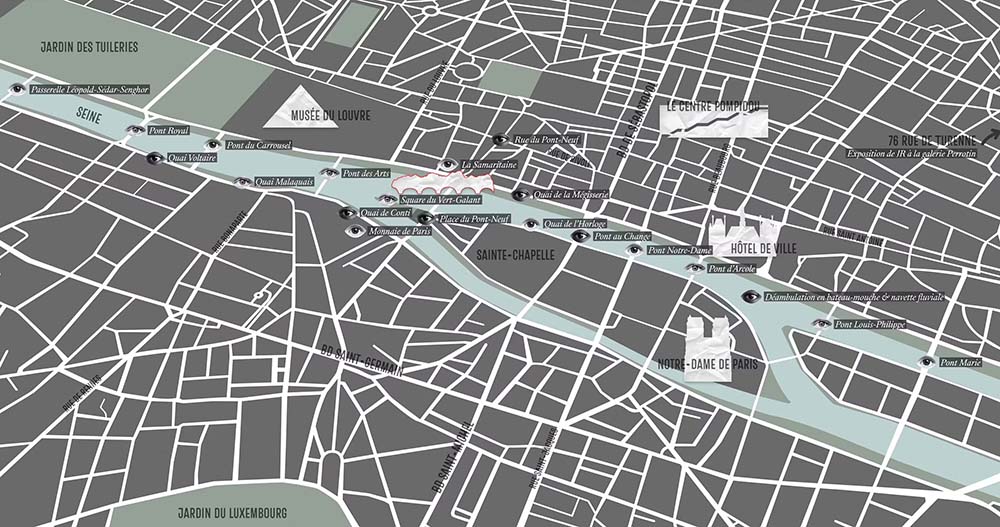
The installation's footprint extends well beyond the bridge itself. Given its monumental scale, La Caverne du Pont Neuf will be visible beyond the immediate surroundings of the Pont Neuf, much like the aerial panorama from the top floor of the Eiffel Tower. Over its three weeks on view, visitors can chart their own path through the French capital to experience the installation from different angles.
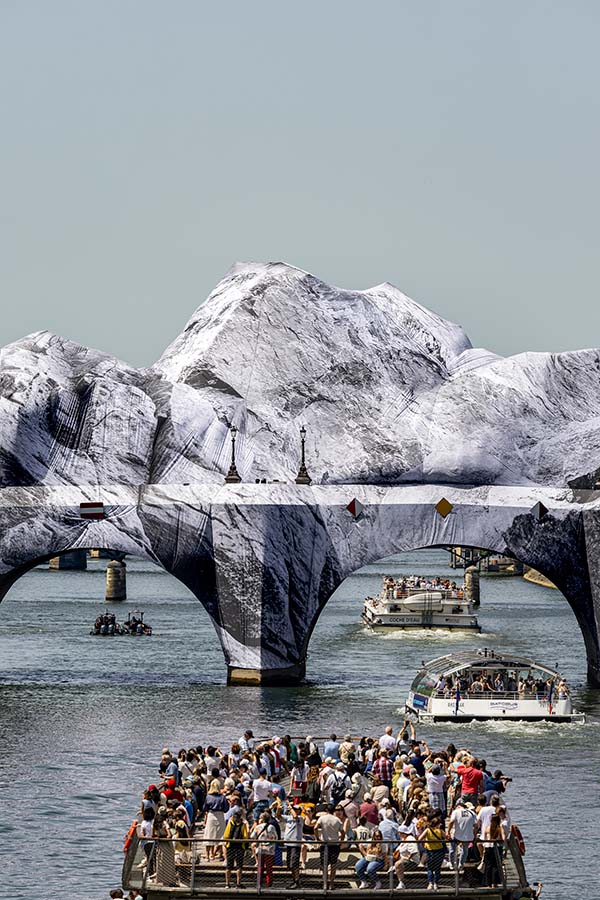
The following access points and vantage options are worth knowing before you go:
- On foot or by bicycle: The banks of the Seine, the high quays and nearby bridges all offer distinct views of the structure.
- From the water: Riverboat services, river shuttles, and Seine cruises offer views from below, with gastronomic options through Extime Travel.
- From the air: At Paris-Charles de Gaulle Airport, a 400-square-metre visual stamp will be displayed on a glass canopy in Hall K of Terminal 2E, allowing passengers to encounter the project on arrival and departure.
- At Galerie Perrotin: Alongside the installation, a new JR exhibition titled Les esquisses de la Caverne will run from June 5 to July 25 at the gallery's Marais space at 76 rue de Turenne, presenting preparatory works that echo the themes and techniques of the installation.
- Visitors enter from Place du Pont Neuf — Christo et Jeanne-Claude and exit onto the Quai du Louvre.
Bloomberg Connects will provide a free mobile guide throughout the run, with multilingual ambassadors stationed on site around the clock to help visitors navigate the work and access behind-the-scenes content and interviews.
Built with care and built to disappear
One of the project's most thoughtful dimensions is its environmental approach. All raw materials are manufactured in Europe, mostly in countries close to France. The design, printing and manufacture of the fabrics are carried out locally in France by hand, by a team of 25 people, with an estimated fabric waste rate of just three to seven percent.
The fabrics are pre-printed with HP Latex inks, which are water-based, free of solvents and volatile organic compounds, and certified Greenguard Gold and UL Ecologo. They require no special ventilation and are odourless, ensuring safe indoor air quality.
All standard technical equipment will be rented, and the only energy required for the project, apart from transportation, will be grid electricity rather than generators. The artistic intention is minimalist, requiring no excess lighting or sound equipment, given the work's scale.
When the installation closes on June 28, several outcomes are under consideration: the artwork may be kept for potential future exhibitions, its materials reused to create other inflatable structures, or fully recycled by the textile industry. JR has stated he will announce his decision before the installation opens to the public.
A documentary, a tribute, and a moment in the city's history
In mid-June, France TV will broadcast La Caverne du Pont-Neuf, a 60-minute documentary directed by Vincent Lorca and produced by Together Media in co-production with Social Animals. The film follows the collective effort to bring the ephemeral work to life, from the Saint-Maximin quarry where the stone that built Paris was extracted to the hangars at Orly where the large-scale prototype took shape.
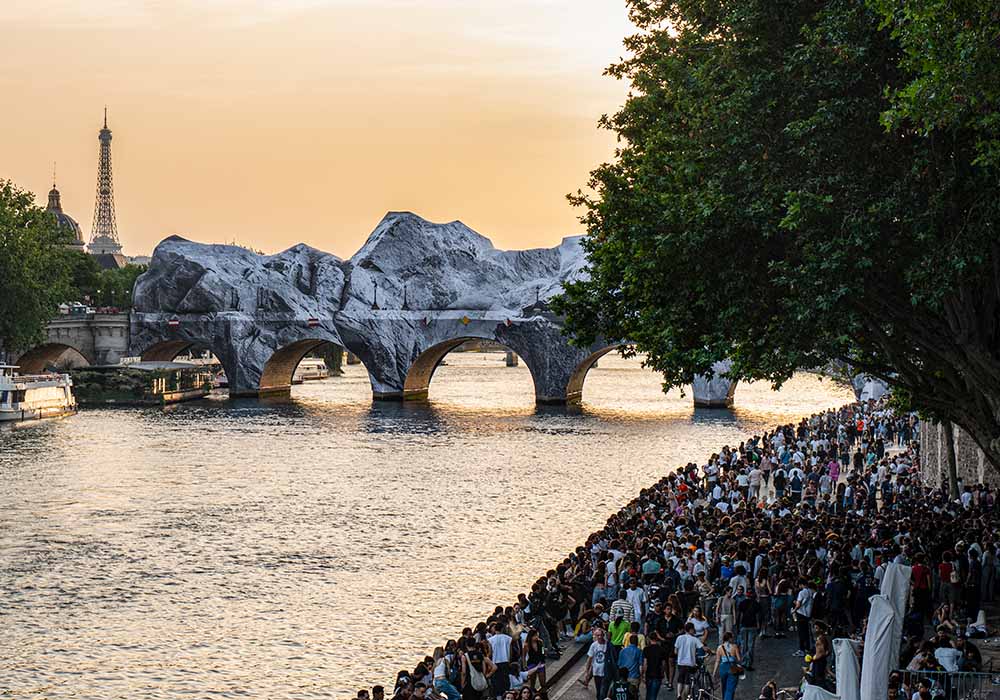
The broader arc of this project sits within a lineage. Christo and Jeanne-Claude spent a decade negotiating permission to wrap the Pont Neuf before realizing their vision in 1985. Their work drew millions to Paris and changed how the world thought about public art. JR's tribute carries that spirit forward: the idea that a temporary transformation of shared public space can be more powerful than anything that stays forever.
Worth the trip to Paris this June
For culturally curious travellers, few things rival the draw of a major public artwork in a city already known for spectacle. La Caverne du Pont Neuf runs for just three weeks, costs nothing to experience, and requires nothing more than showing up. Whether you approach it by foot along the quais, from a riverboat at dusk or through augmented reality glasses at the entrance, what you encounter will be unlike anything the city has offered before.
Paris rewards those who arrive at the right moment. June 2026 is one of those moments. The cave opens on the 6th. Be there.
La Caverne du Pont Neuf is on view from June 6 to 28, 2026. Entry is free, 24 hours a day, 7 days a week. Visitors enter from Place du Pont Neuf — Christo et Jeanne-Claude and exit onto the Quai du Louvre. Full visitor information is available at jr-art.net.