
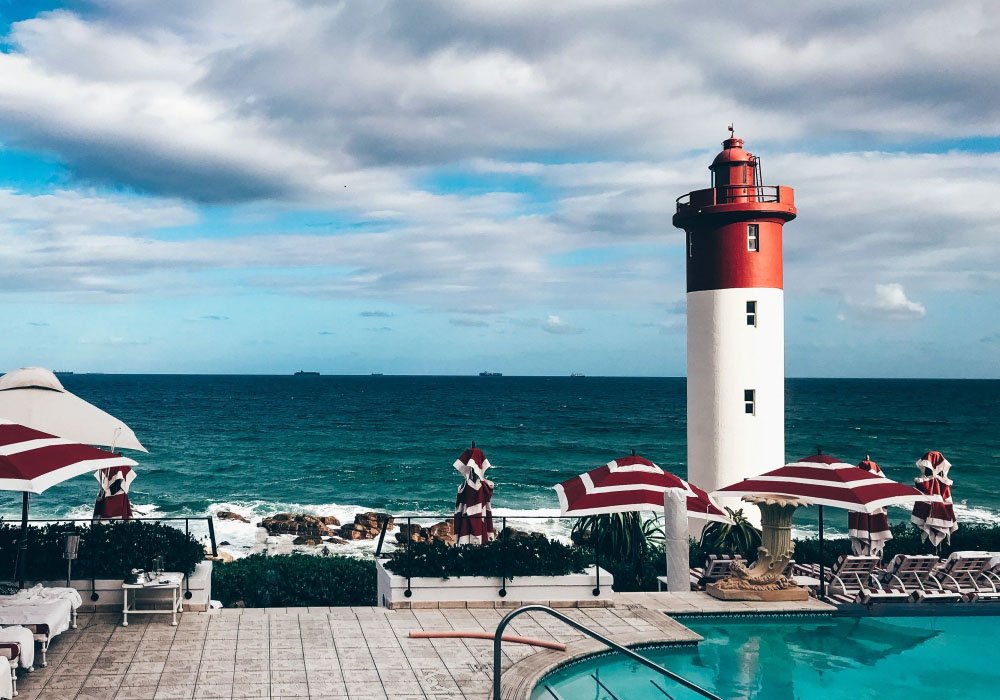
Durban is one of Africa's most underrated travel destinations, where the warm Indian Ocean meets a city alive with flavour, culture, and surf. From the legendary bunny chow stalls of eThekwini's streets and the attractions of the Golden Mile to the living traditions of the Zulu coast and the scenic hills of the Midlands Meander, this South African coastal gem rewards every type of traveller with experiences that go far beyond the beach.
Durban has a way of surprising people. Travellers often arrive expecting a beach city and leave with a full array of sensory memories. From the fiery hit of a curry-soaked bunny chow eaten without cutlery, the thunderous pull of a wave at Bay of Plenty, the crack of a drum at a Zulu cultural performance, and the misty green roll of the KwaZulu-Natal Midlands opening up just an hour inland. Time Out recently ranked Durban 14th on its list of the world's best places to travel in 2026, citing its Zulu cultural history and Indian food influence — particularly bunny chow — as key reasons for its global appeal.
That recognition is well-earned. Officially known as eThekwini, the city sits on the western shore of the Indian Ocean at the heart of KwaZulu-Natal, where centuries of Zulu tradition, Indian culinary heritage, and a surf-obsessed coastal culture have fused into something entirely its own. This guide is for the traveller who wants to do it right: eat like a local, ride the right waves, understand the culture, and make time for a day trip that will reframe the whole region.
Durban's street food scene: Flavour with a history lesson
The bunny chow: eThekwini's edible icon
No food on earth is quite as Durban as a bunny chow. For the uninitiated, it is a hollowed-out loaf of fluffy white bread filled with a deliciously hot Durban curry and topped with the original bread plug, which serves as the perfect vehicle for mopping up the aromatic gravy. You eat it with your hands. That part is non-negotiable.
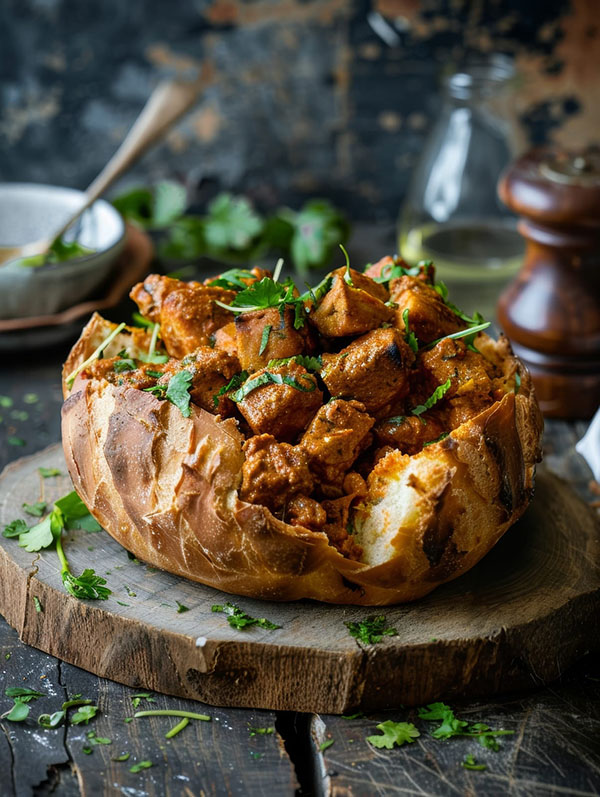
The dish was shaped by both necessity and exclusion. Workers and caddies needed food that was quick, cheap, and portable, and hollowing out a loaf of white bread, filling it with curry, and sealing it with the bread "plug" solved the problem neatly. The word "bunny" is said to derive from "bania," a North Indian merchant caste prominent among Durban's takeaway owners, while "chow" is simply slang for food. Apartheid laws prevented different races from dining together, making takeaway service the only option for many — and out of that exclusion came one of the world's great street foods.
The classic bunny chow comes in quarter, half, or full loaves, with fillings like mutton, chicken, sugar beans, or broad beans, all cooked in Durban curry. The dish is meant to be fast, communal, and messy — a deliberate break from restaurant formality. Do not, under any circumstances, eat one with a knife and fork.
The best places to find one are often the most unassuming. Cane Cutters, a central Durban institution, is widely considered among the best in the city — quick service, tender meat, very few bones, the perfect amount of gravy, and extremely fresh bread. A quarter mutton bunny runs around R75, which is very competitively priced. Other reliable options include Gate of India, Gounden's, and, for those near Suncoast Casino, Thava. Each has its loyal following, and Durbanites will debate the rankings endlessly. That, too, is part of the experience.
Beyond the bunny: the full eThekwini street food lineup
The bunny chow gets the headlines, but the wider street food scene in Durban is just as compelling. The city's Victoria Street Market and its surrounding lanes are the best starting point for a proper food crawl. CNN has named Durban one of the best street food cities in the world, ranking it alongside Bangkok, Mumbai, Istanbul, and Marrakech. Not bad for a city that many international travellers still overlook.
Durban's street food staples worth trying include:
- Vetkoek: Deep-fried dough filled with spiced minced meat or jam, warm and satisfying at any time of day.
- Chili bites: Crispy, spiced balls of fried dough that pack a real punch, popular with locals as a quick snack.
- Samoosas: Triangular parcels stuffed with vegetables or meat, served with sharp chutneys.
- Masala dosa: A South Indian staple that has found a firm home in Durban's Indian community, featuring a thin, crisp rice crepe wrapped around spiced potato filling.
- Indian sweets: Jalebi, gulab jamun, and barfi are available from sweet shops throughout the Grey Street precinct (now Yusuf Dadoo Street) and make for a satisfying end to any food walk.
| Street food | Main ingredients | Flavour profile |
|---|---|---|
| Vetkoek | Flour, yeast, minced meat | Savoury, slightly sweet |
| Samoosa | Flour, potato, peas, spices | Spicy, crispy |
| Chili bites | Flour, chilli, herbs | Spicy, crunchy |
| Bunny chow | White bread, Durban curry | Bold, aromatic, fiery |
Durban curry itself deserves special mention. Built on turmeric, coriander, cumin, and fresh curry leaves, it has a heat profile unlike anything you would find in Indian restaurants elsewhere. The result of generations of culinary fusion in one of the continent's most culturally layered cities, it is something you simply have to taste to understand.
The Golden Mile: Durban's sun-soaked waterfront
What the Golden Mile actually is
The Golden Mile is the popular stretch of beachfront running roughly from uShaka Beach at the Point Waterfront in the south to Suncoast Casino and Entertainment World in the north, sitting directly alongside the central business district to its west. The wide sweep of golden sand, divided by various piers, offers opportunities for swimmers, surfers, and sunbathers alike, and most beaches along the Mile are protected year-round by lifeguards and shark nets.
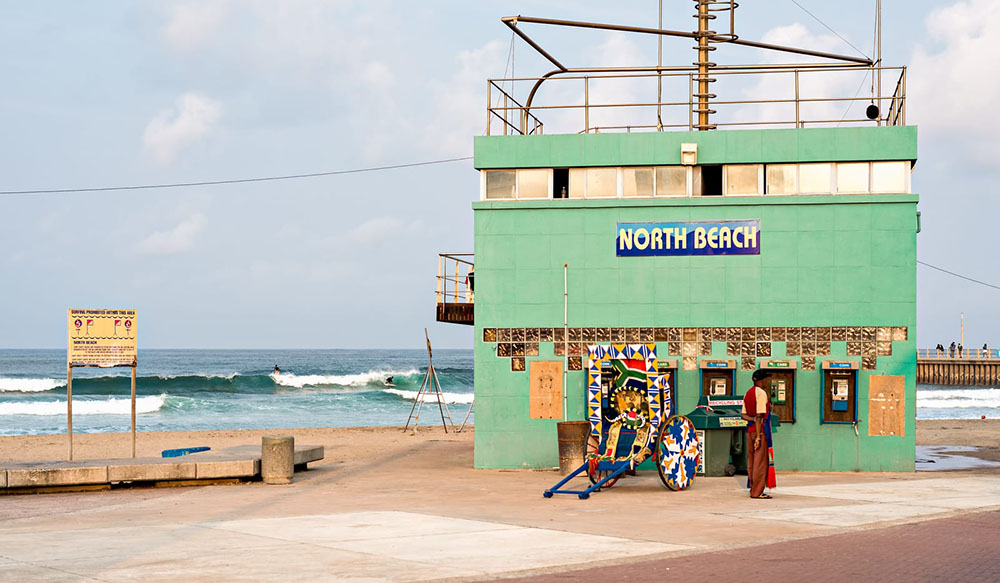
The promenade is lined with restaurants serving seafood, burgers, and ice-cold beers, while the beach infrastructure — paddling pools, slides, fountains, and the Rachel Finlayson salt-water swimming pool — makes it genuinely family-friendly. For snorkelling, Vetch's Pier at the south end is the best spot, and the sheltered area nearby is popular with kayakers, windsurfers, jet ski riders, and stand-up paddleboarders.
Beaches and surf spots along the Mile
The Golden Mile concentrates several of Durban's best-known surf breaks within easy walking distance of each other. Each spot has a distinct character:
- North Beach: Gentle, forgiving waves — the go-to for beginners and families.
- Bay of Plenty: Longer rides and well-shaped peeling waves, ideal for intermediate and advanced surfers.
- South Beach: Consistent surf with a lively beach scene, popular with a mixed crowd.
- New Pier: Powerful and fast, best left to experienced surfers.
- Addington Beach: Quieter, less crowded, and well-regarded for those wanting space in the water.
The first South African Surfing Championships took place in Durban in 1966, and the city's relationship with surf culture has only deepened since. Local surf schools along the Golden Mile can have a complete beginner standing on a board within a session or two. The community is welcoming, the water is warm year-round, and the vibe in the lineup is generally relaxed.
Surfing seasons at a glance
Knowing when to visit makes a real difference to the water experience.
| Season | Wave quality | Weather | Best for |
|---|---|---|---|
| Summer (Dec–Feb) | Small to medium, gentle | Warm, sunny, occasional rain | Beginners, casual surfers |
| Autumn (Mar–May) | Medium to large, consistent | Cooler, drier, clearer | All levels; best for skill development |
| Winter (Jun–Aug) | Large, powerful | Cool, windy, dry | Experienced surfers |
| Spring (Sep–Nov) | Medium, variable | Warming up, occasional rain | Intermediate surfers |
Autumn is the sweet spot for most visitors. The waves are reliable, the weather is pleasant, and the crowds are more manageable than the peak December holiday season.
Dining and landmarks on the Mile
The Golden Mile rewards those who linger. Beyond the surf, a few landmarks are worth building time around:
- uShaka Marine World: Covered in full below, but worth anchoring a full day around.
- Moses Mabhida Stadium: Built for the 2010 FIFA World Cup, the stadium is now famous for games and concerts and offers a sky car ride to the top of its iconic arch, as well as a giant swing for the more adventurous.
- Suncoast Casino: With its restaurants and private beach at the northern end of the Golden Mile, Suncoast makes for a relaxed dinner stop with ocean views.
- The Brasserie at The Edward: A historic dining institution on OR Tambo Parade, offering Art Deco-inspired surroundings, an international menu, and an expansive outdoor terrace with Indian Ocean views. Perfect for a sundowner after a day on the sand.
uShaka Marine World: Durban's ultimate family day out
What's inside
uShaka Marine World is a 16-hectare theme park comprising eight attractions: Sea World (one of the largest aquariums in the world), Wet 'n Wild water park (home to the highest slide in Africa), Sea Animal Encounters Island, uShaka Beach, Village Walk, Kids World, Dangerous Creatures, and Chimp & Zee. The aquarium is built inside a simulated shipwreck, a genuinely theatrical design — moving through the marine exhibits feels like exploring the hull of a sunken vessel.
You can comfortably spend a full day here without running out of things to do. For those who want a closer encounter, the park offers ray-feeding experiences where visitors wade waist-deep in water, surrounded by Spotted Eagle Rays, and feed them by hand. Bookings are essential and fill up quickly, so plan ahead.
What to keep in mind
The Ocean Walker experience is currently closed until further notice, so confirm the status of any specific experience before visiting. Prices change seasonally, and it is worth checking the uShaka website directly for current rates and opening times. Food hampers, braais, and cooler boxes are not permitted within the park. The Village Walk mall, adjacent to the main attractions, is a good option for meals and shopping, and typically opens earlier than the rest of the park.
Zulu heritage along the coast
Traditional practices and living culture
The Zulu people have shaped the character of this coastline for centuries, and their culture remains genuinely present in everyday life rather than existing purely as a tourist exhibit. Visitors who approach it with curiosity and respect will find extraordinary depth.
Several living traditions are worth understanding before you arrive:
- Umkhosi woMhlanga (Reed Dance): An annual ceremony in which thousands of young women gather reeds to present to the Zulu royal house, celebrating community and heritage. It takes place each September at Enyokeni Royal Palace in Nongoma.
- Beadwork: Intricate beaded jewellery and accessories carry specific messages about identity, relationship status, and community belonging. The colours have established meanings — red often signals love or strong emotion, white represents purity, and black carries associations with maturity and resilience.
- Traditional healing: Herbal and spiritual practices passed down through generations remain a respected pillar of Zulu community life.
| Practice | Description | Significance |
|---|---|---|
| Umkhosi woMhlanga (Reed Dance) | Annual gathering of young women to collect reeds | Honours the royal house, celebrates community |
| Beadwork | Crafting with coloured glass beads | Conveys social status and personal stories |
| Traditional healing | Herbs and spiritual practice | Maintains health and community spiritual balance |
Cultural festivals to look out for
Durban and the surrounding KwaZulu-Natal region have a genuine cultural calendar worth planning around. The most significant annual event is King Shaka Day, held every 24 September — South Africa's national Heritage Day — when the Zulu nation gathers to celebrate the life of King Shaka kaSenzagakhona, the founder of the Zulu Kingdom. Ceremonies take place at several sites across KwaZulu-Natal, featuring traditional drumming, indlamu dancing, vibrant beadwork displays, communal food including utshwala (traditional sorghum beer), and storytelling drawn directly from Zulu oral history. For visitors, it is one of the most accessible and genuinely moving ways to experience living Zulu culture.
The Umkhosi woMhlanga (Reed Dance) is the other major event on the calendar, held each September at the Enyokeni Royal Palace in Nongoma, roughly three hours north of Durban. Thousands of young women travel from across KwaZulu-Natal and beyond to participate, carrying reeds in procession to honour the royal house. It is a deeply serious ceremony as much as a celebratory one, and visitors who attend should approach it with appropriate respect. Both events are worth timing a visit around if you want to experience Zulu cultural life at its most vivid and communal — as practice, not performance.
Art, craft, and where to buy
Zulu art is both functional and deeply symbolic. Coastal markets, particularly those near the beachfront and in the Warwick Triangle area, carry authentic pieces directly from artisans. What to look for:
- Beadwork: Necklaces, bracelets, and belts with pattern-specific meanings.
- Wood carving: Animal figures, ceremonial objects, and household items carved from local hardwoods.
- Pottery: Hand-shaped clay pots used for cooking, water storage, and ceremony.
- Woven goods: Baskets and textiles made from natural fibres, often with geometric traditional patterning.
Buying directly from artisans rather than large souvenir shops keeps money within the community and means you leave with something that carries a real story.
Exploring coastal nature: Marine life and conservation
What lives in these waters
The warm Indian Ocean currents off Durban support a rich and surprisingly diverse marine ecosystem. Snorkelling around Vetch's Pier offers encounters with colourful reef fish and the occasional turtle. For serious divers, Aliwal Shoal — located about 50 km south of Durban off the town of Umkomaas — is one of the top ten dive sites in the world, rated as such by Jacques Cousteau. It hosts ragged-tooth sharks, tiger sharks, manta rays, and humpback whales during migration season, all within a protected marine area that has been designated a Mission Blue Hope Spot.
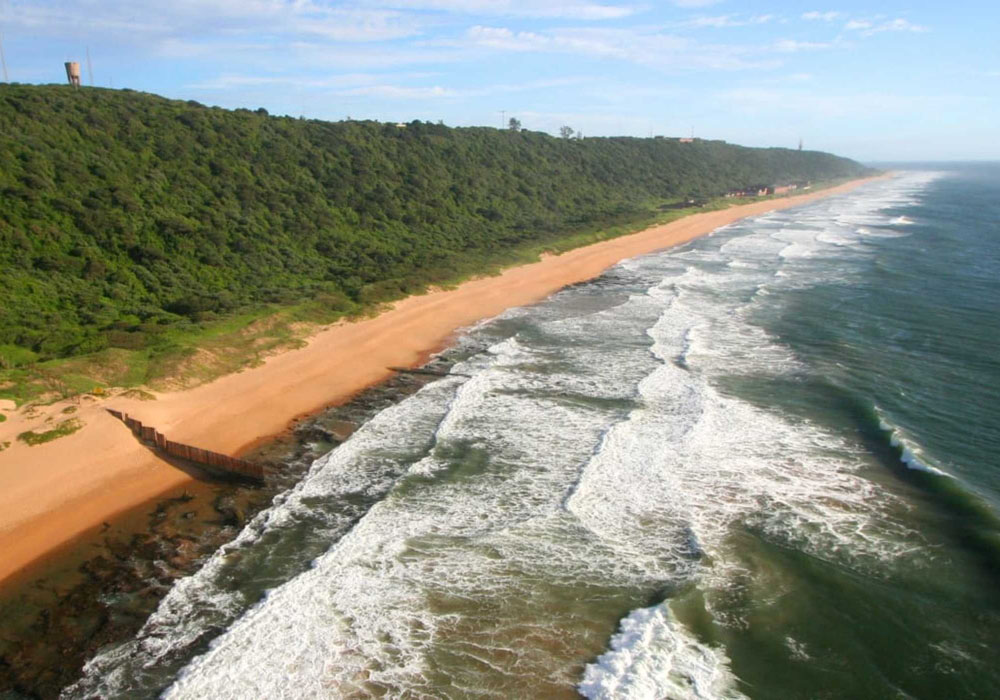
Dolphin pods are a common sight from the Golden Mile promenade, especially in the early morning, and humpback whale migrations pass close to the KwaZulu-Natal coastline between June and November. Whale-watching boat tours operate from Durban's harbour during the migration window, and shore-based sightings from the Golden Mile and the Bluff are a regular occurrence throughout the season.
Popular marine encounters include:
- Snorkelling around Vetch's Pier at South Beach
- Guided dive charters to Aliwal Shoal, about 50 km south of Durban, near Umkomaas
- Dolphin spotting from the Golden Mile promenade
- Whale watching boat tours during the June to November migration window
- Sea turtle encounters at Aliwal Shoal and along the broader KwaZulu-Natal coast
Conservation on the ground
Durban's coastline faces real pressures — pollution, plastic waste, and the effects of overfishing among them. Several organizations work actively to protect the marine environment. Beach clean-ups are regularly organized along the Golden Mile and southern beaches, and visitors can participate by connecting with local environmental groups. Marine protected areas, including the Aliwal Shoal MPA established in 1991 and expanded in 2018, have been established to give fish and coral populations space to recover. Educational programmes in local schools aim to build long-term stewardship of the ocean.
Visitors can contribute simply by following beach guidelines, using reef-safe sunscreen when snorkelling or diving, and avoiding single-use plastics while on the coast.
Day trip: The Midlands Meander
What it is and how to get there
An hour or two from Durban's city centre, the Indian Ocean gives way to rolling mist-draped hills, horse studs, and working farms. The Midlands Meander is a collection of tourist routes in the heart of KwaZulu-Natal, offering accommodation, arts and crafts, fine cuisine, outdoor activities, and historic landmarks. It is one of the most beloved road trip routes in South Africa, and it makes for a perfect counterpoint to a few days on the coast.
The most common route from Durban involves taking the N3 highway north, with the drive taking approximately 1.5 to 2 hours to reach the start of the route near Howick. A car is the best way to explore, as it allows you to move between stops at your own pace. Several guided day tours also operate from Durban if you would prefer not to self-drive.
What to see and do
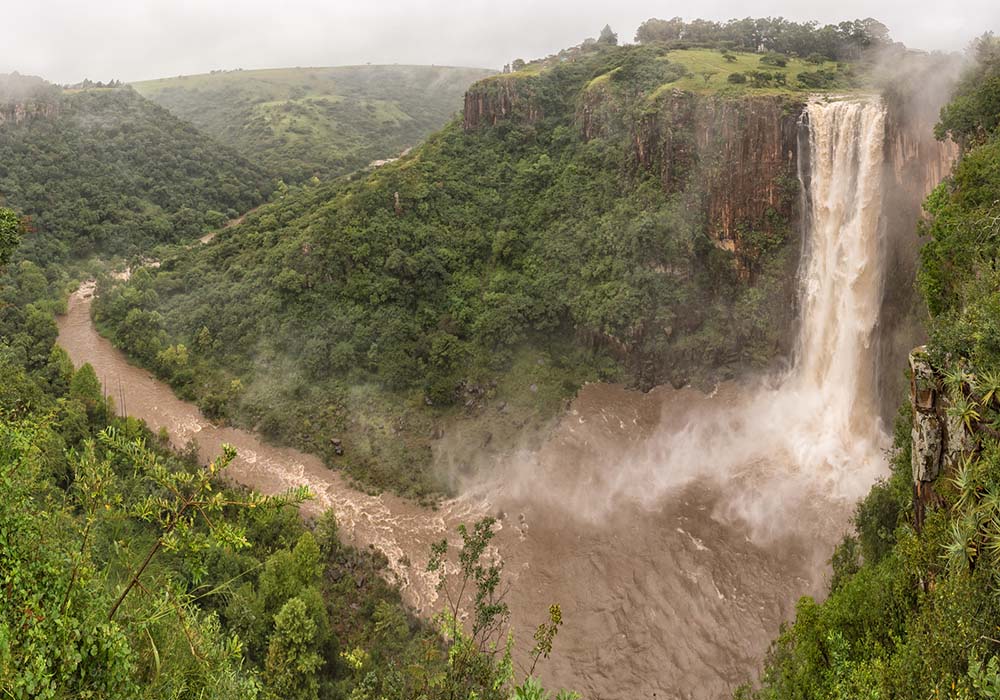
A full-day tour from Durban typically passes through the Valley of a Thousand Hills, historical Pietermaritzburg, Hilton, Midmar Dam, the Nelson Mandela Capture Site, and the famous Howick Falls, which cascade 95 metres into a churning pool below. The route is situated between Pietermaritzburg in the east and the uKhahlamba Drakensberg mountain range (a UNESCO World Heritage Site) in the west, and has grown from a craft-focused route into a full experiential destination offering horse riding, fly fishing, hiking, mountain biking, golf, and hot air ballooning.
Key highlights along the route include:
- Howick Falls: Also known as KwaNogqaza ("the place of the tall one"), this 95-metre cascade sits almost in the centre of the picturesque town of Howick and is as tall as Victoria Falls.
- Nelson Mandela Capture Site: A moving memorial near Howick marking the spot where Mandela was captured on 5 August 1962, featuring a large sculpture and interpretive exhibits.
- Ardmore Ceramic Art: One of the highlights of any Midlands itinerary, Ardmore's works have been recognized by Christie's as modern-day collectibles.
- Piggly Wiggly: A popular farm-style market and café near Nottingham Road, recommended by nearly every traveller who has done the route.
- Howick: Recently designated a UNESCO City of Crafters, recognized internationally for its creativity and strong community of artisans.
Accommodation along the Midlands Meander ranges from luxurious self-catering cottages overlooking dams to rustic off-grid getaways in nature. For visitors with an extra day or two, staying overnight unlocks the Meander at a much more satisfying pace — there is simply too much to do in a single day.
Where the road takes you
Durban rewards the traveller who slows down. It is a city that reveals itself gradually — through the steam rising off a curry pot on a street corner, through a long paddle out at Bay of Plenty at dawn, through the geometry of a beaded necklace laid out on a market table, through the sudden green opening of the Midlands as the coastal humidity gives way to cool upland air.
The city's appeal cuts across traveller types. Budget backpackers and digital nomads find cheap, flavourful eating, a strong surf culture, and hostels with real character. Families can anchor their itinerary at the Golden Mile, uShaka Marine World, and for easy beach days. Culture-seekers have one of the richest and most accessible living Zulu heritage landscapes anywhere in southern Africa. And anyone drawn by food will find a city that has earned its place among the world's great street food destinations — one that has been quietly building that reputation, one bunny chow at a time, since the 1940s.
Come for a few days. Stay for a week. Eat with your hands, paddle into a set, buy something handmade from the person who made it, and drive into the hills before you leave. That combination — ocean, spice, culture, and countryside — is what makes eThekwini something genuinely different, and genuinely worth your time.